

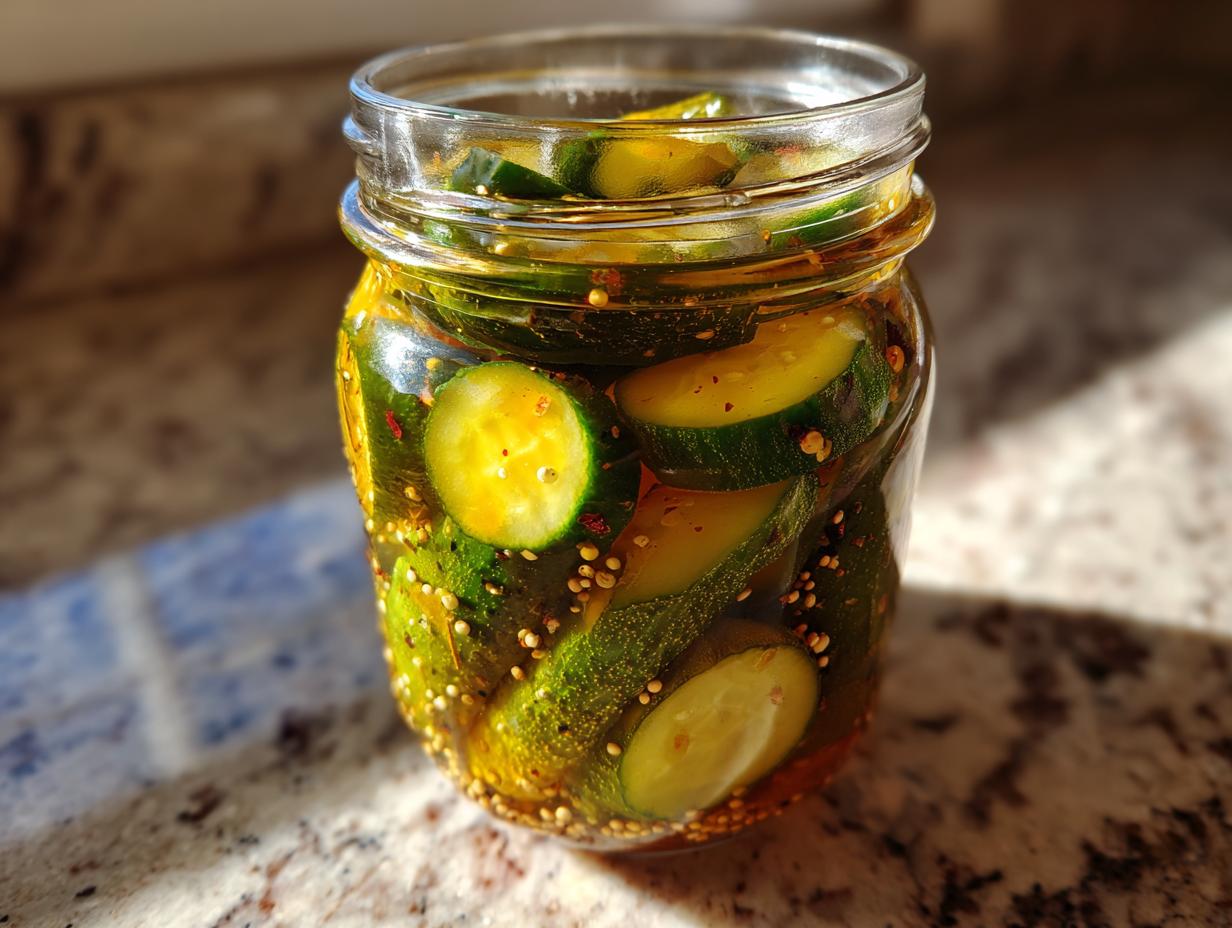
There’s something magical about opening a jar of homemade Senfgurken German Mustard Pickles – that first whiff of tangy vinegar and mustard seeds takes me right back to my Oma’s kitchen. She’d make big batches every summer when cucumbers were at their peak, insisting these zesty pickles made any meal better. What sets them apart? That glorious mustard kick! Unlike regular pickles, Senfgurken get their unique personality from whole mustard seeds that pop with flavor in every crunchy bite. I still use her handwritten recipe, though I’ve tweaked the sugar-vinegar balance slightly over the years to suit my taste. Whether piled on a sandwich or served alongside sausages, these traditional German pickles add brightness to every bite.
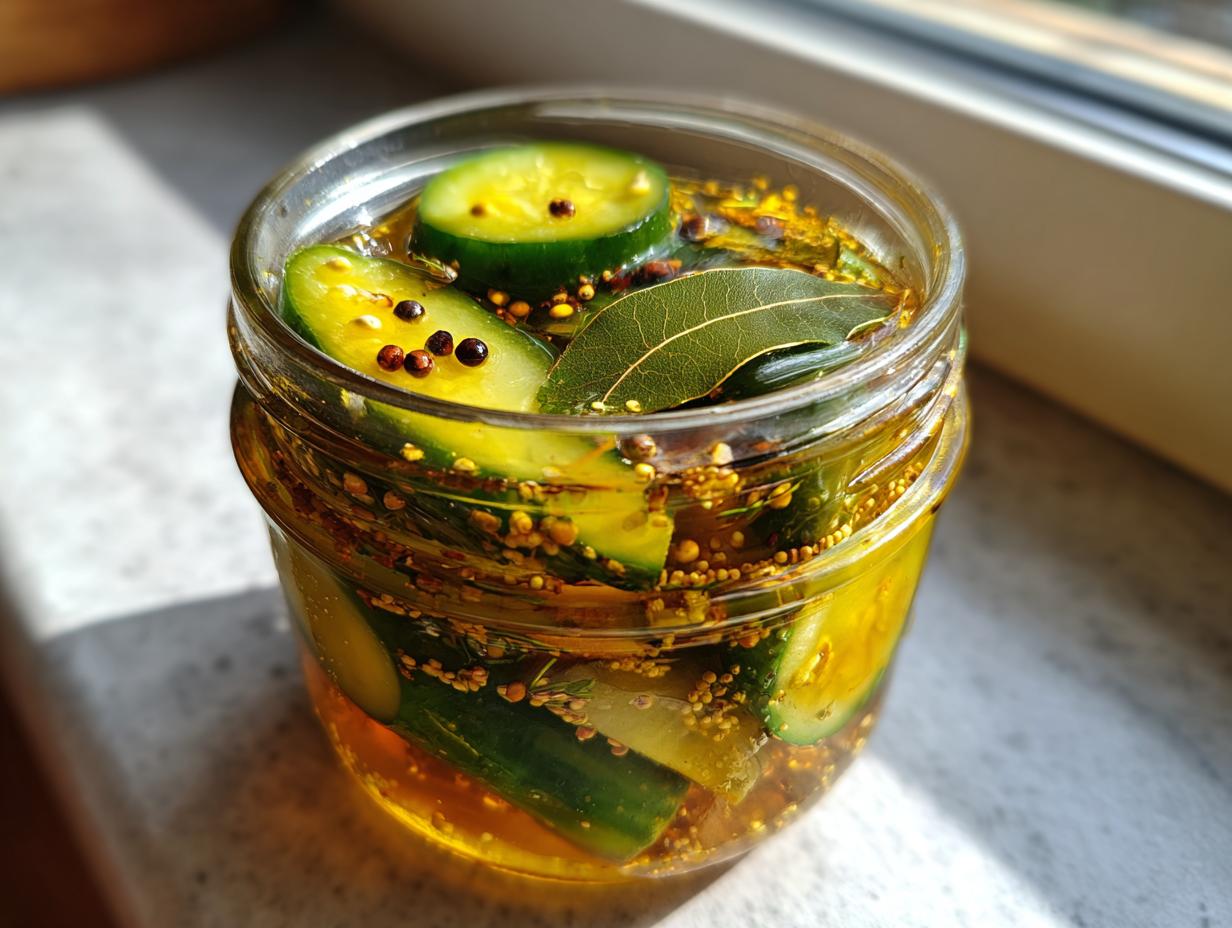
Why You’ll Love These Senfgurken German Mustard Pickles
Once you taste homemade Senfgurken, you’ll wonder how you ever settled for store-bought pickles. Here’s what makes them so special:
- That authentic German flavor – The mustard seeds aren’t just for show! They give these pickles their signature tangy pop that dances on your tongue.
- Satisfying crunch in every bite – Unlike soggy commercial pickles, ours stay crisp thanks to fresh cucumbers and proper brining.
- Easier than you’d think – No fancy equipment needed – just basic kitchen tools and about 30 minutes of hands-on time.
- Your new secret sandwich weapon – They add incredible zing to burgers, Reubens, or even avocado toast.
- Charcuterie board superstar – Pair them with German sausages, cheeses, and dark rye bread for instant Oktoberfest vibes.
Trust me, once you’ve made your first batch, you’ll start hoarding cucumbers at the farmers’ market like I do!
Senfgurken Ingredients List
Gathering the right ingredients is half the battle with these pickles – here’s exactly what you’ll need for that perfect mustardy crunch:
- 1 kg small, firm cucumbers (Kirby or pickling cucumbers work best – they stay crisp!)
- 500 ml water (filtered if your tap water is hard)
- 250 ml white vinegar (5% acidity for proper preserving)
- 50 g white sugar (balances the tang perfectly)
- 20 g coarse kosher salt (never use iodized – it makes brine cloudy)
- 2 tbsp mustard seeds (yellow or brown both work)
- 1 tbsp black peppercorns (whole, not ground)
- 2 bay leaves (the secret flavor booster)
- 1 medium onion, thinly sliced (yellow or white works great)
Don’t forget your sterilized jars – I use two 1-quart mason jars with tight-sealing lids. Now let’s get pickling!
Essential Equipment for Making Senfgurken
You don’t need fancy gear for these pickles – just a few basics from your kitchen:
- Large stainless steel pot (for boiling the brine)
- 2 clean 1-quart glass jars with lids (mason jars work perfectly)
- Ladle and wide-mouth funnel (makes filling jars mess-free)
- Clean kitchen towel (for handling hot jars)
Quick sterilization tip: Wash jars and lids in hot soapy water, then pour boiling water over them right before filling. Easy peasy!
How to Make Senfgurken German Mustard Pickles Step-by-Step
Okay, let’s get our hands dirty—or rather, vinegary! Making Senfgurken is easier than you think, but there are a few key steps you shouldn’t skip if you want that perfect crisp texture and bold mustard flavor.
Preparing the Brine for Senfgurken
This brine is where the magic starts! In your large pot, combine the water, vinegar, sugar, salt, mustard seeds, peppercorns, and bay leaves. Now, here’s my little trick—heat it slowly while stirring constantly until the sugar and salt completely dissolve. Don’t rush this part! Once it comes to a boil, reduce the heat and let it simmer gently for exactly 5 minutes—this lets all those wonderful spices infuse their flavors. Your kitchen will smell like a German deli, and that’s how you know it’s working!
Jar Packing Technique for Crisp Senfgurken
While your brine simmers, pack your sterilized jars with the cucumbers and sliced onions. Here’s where most beginners go wrong—you’ve got to pack them tightly but not squished! Alternate layers of cucumbers and onions, pressing down gently as you go. Leave about 1 cm headspace at the top—no more, no less—or you’ll either have overflowing brine or floating pickles. Carefully pour the hot brine over them, making sure all cucumbers are completely submerged. If any float up, tuck them back under with a clean spoon—those little rebels will spoil if they’re not covered!
Seal the jars immediately (careful—they’re hot!) and let them cool to room temperature upside down for the first hour—this helps create a better seal. Then flip them right-side up and resist touching them for at least 3 days while they work their pickle magic in the fridge. The hardest part? Waiting!
Expert Tips for Perfect Senfgurken
After making dozens of batches (and eating even more!), I’ve learned a few secrets for can’t-miss Senfgurken every time:
- Fresh is everything – Use cucumbers within 24 hours of picking for maximum crunch. If they’re bendy at the store, walk away!
- Play with the spices – Love mustard? Add an extra tablespoon of seeds. Want heat? Toss in some crushed red pepper flakes.
- Patience pays off – That 3-day wait isn’t just for flavor—it lets the cucumbers fully absorb the brine. Sneak a taste sooner and you’ll be disappointed!
Cloudy brine? Don’t panic! It’s usually just from the mustard seeds releasing starches—still totally safe to eat. But if you see mold? Toss it immediately and sterilize those jars extra well next time.
Senfgurken Variations and Serving Suggestions
Once you’ve mastered the basic Senfgurken recipe, try these fun twists – my Oma would approve!
- Garlic lovers: Add 2-3 crushed cloves per jar for extra punch
- Dill delight: Toss in a few fresh dill sprigs with the cucumbers
- Spice it up: A pinch of red pepper flakes adds gentle heat
These mustard pickles shine brightest alongside:
- German classics: Bratwurst, pretzels, or schnitzel
- Sandwich superstars: Pastrami on rye or turkey clubs
- Cheese board magic: Pair with sharp cheddar or creamy brie
My personal favorite? Chopped Senfgurken stirred into potato salad – game changer!
Storing Your Homemade Senfgurken
These pickles keep beautifully in the fridge for up to 4 weeks – if they last that long in your house! Always store them in their brine, and look for crisp texture and clear liquid as freshness indicators. Toss immediately if you see mold, fuzz, or an off smell. And whatever you do, don’t leave them at room temperature – that crisp crunch we love depends on staying chilled!
Senfgurken German Mustard Pickles Nutrition
Here’s the nutritional breakdown per 100g serving (remember, these are estimates!): Calories: 30 • Sugar: 5g • Sodium: 400mg • Carbs: 6g • Fiber: 1g • Protein: 1g. Naturally fat-free and vegetarian-friendly – pickle away guilt-free!
Senfgurken FAQs
Can I use large cucumbers instead of small ones?
Technically yes, but I don’t recommend it! Big cucumbers tend to get mushy and have too many seeds. The small Kirby or pickling cucumbers stay wonderfully crisp – that’s why they’re called for in traditional Senfgurken recipes. If you must use larger ones, peel them and scoop out the seeds first.
How long do Senfgurken need to ferment?
These aren’t fermented pickles like sauerkraut – the vinegar brine does all the work! After packing the jars, they just need 3 days in the fridge to develop their full mustardy flavor. No bubbling or special equipment required.
Can I substitute the sugar?
Absolutely! I’ve had success using honey or maple syrup, though they’ll add their own flavors. For sugar-free versions, erythritol works surprisingly well – just don’t skip sweetener entirely or the balance will be off.
What if I don’t have mustard seeds?
While mustard seeds are traditional, you can use 1 tablespoon dry mustard powder in the brine instead. The flavor will be slightly different – more uniform rather than those delightful little pops of mustardy goodness.
Are Senfgurken spicy?
Not typically! The mustard seeds add tang rather than heat. If you want spicy German pickles, add a few slices of fresh jalapeño or a pinch of red pepper flakes to each jar before sealing.
Tangy Senfgurken German Mustard Pickles Recipe That Crunches
Senfgurken are traditional German mustard pickles made with cucumbers, mustard seeds, and spices.
- Prep Time: 15 mins
- Cook Time: 10 mins
- Total Time: 25 mins
- Yield: 2 jars 1x
- Category: Pickles
- Method: Preserving
- Cuisine: German
- Diet: Vegetarian
Ingredients
- 1 kg small cucumbers
- 500 ml water
- 250 ml white vinegar
- 50 g sugar
- 20 g salt
- 2 tbsp mustard seeds
- 1 tbsp black peppercorns
- 2 bay leaves
- 1 onion, sliced
Instructions
- Wash cucumbers and trim ends.
- Combine water, vinegar, sugar, salt, mustard seeds, peppercorns, and bay leaves in a pot.
- Bring brine to a boil, then simmer for 5 minutes.
- Pack cucumbers and sliced onion tightly into sterilized jars.
- Pour hot brine over cucumbers, leaving 1 cm headspace.
- Seal jars and let cool to room temperature.
- Store in refrigerator for at least 3 days before serving.
Notes
- Use small, firm cucumbers for best texture.
- Adjust sugar and vinegar for preferred taste.
- Keeps refrigerated for up to 4 weeks.
Nutrition
- Serving Size: 100 g
- Calories: 30
- Sugar: 5 g
- Sodium: 400 mg
- Fat: 0 g
- Saturated Fat: 0 g
- Unsaturated Fat: 0 g
- Trans Fat: 0 g
- Carbohydrates: 6 g
- Fiber: 1 g
- Protein: 1 g
- Cholesterol: 0 mg