


There’s something magical about filling your pantry with jars of golden pumpkin that you preserved yourself. I still remember my first time canning pumpkin – that satisfying pop of sealing jars, the sweet earthy aroma filling the kitchen, and the pride of knowing I’d captured autumn’s bounty to enjoy all year. Canning pumpkin lets you take those perfect pie pumpkins from your garden or farmer’s market and turn them into a versatile ingredient that’s ready whenever you need it.
Now, I’ll be honest – when I started, the pressure canner intimidated me. But once I learned the simple steps (and why they’re so important for safety), it became one of my favorite preserving projects. Unlike water bath canning, pumpkin requires pressure canning because it’s a low-acid vegetable. Trust me, it’s worth the extra equipment to do it safely. The reward? Dozens of meals from pumpkin soup to holiday pies, all from one afternoon’s work in the kitchen.

Why You’ll Love Canning Pumpkin
Canning pumpkin is one of those kitchen skills that keeps giving back. Here’s why I’m obsessed:
- Seasonal abundance: When pie pumpkins flood the markets each fall, you can capture that perfect ripeness in jars
- Year-round pumpkin: No more hunting for decent canned pumpkin in April – your homemade stash tastes better anyway
- Budget-friendly: Store-bought canned pumpkin costs 3-4 times more per ounce than home-preserved
- Ingredient control: You know exactly what’s in your jars – just pumpkin (and maybe a squeeze of lemon)
My favorite part? Opening a jar in February and getting that fresh-picked pumpkin aroma all over again.
Essential Equipment for Canning Pumpkin
You’ll need a few key tools to can pumpkin safely. My canning days got so much easier once I gathered these essentials:
- Pressure canner (not just a water bath pot – this is non-negotiable for pumpkin!)
- Quart-sized canning jars with new lids and screw bands (I prefer wide-mouth for easier packing)
- Jar lifter (trust me, you don’t want to handle hot jars without one)
- Bubble remover or clean chopstick to release air pockets
- Large stockpot for pre-cooking pumpkin cubes
- Sharp chef’s knife and sturdy cutting board (pumpkins can be tough!)
That jar lifter? Worth its weight in gold when you’re moving steaming hot jars. I learned that the hard way.
Ingredients for Canning Pumpkin
You only need a few simple ingredients for successful pumpkin canning, but choosing them wisely makes all the difference:
- 4-6 pounds fresh pie pumpkin (absolutely NOT field pumpkin – more on this below!)
- Water for boiling and filling jars
- 1 tablespoon lemon juice per quart jar (optional, but helps maintain acidity)
Pick pumpkins that feel heavy for their size with smooth, unblemished skin. I always give mine a good knock – you want that hollow sound that says “perfectly ripe.” Soft spots or mold? Toss ’em – they won’t can well.
Pumpkin Selection Tips
Here’s why pie pumpkins are the only choice for canning: their flesh is denser, sweeter, and has way less water than those giant field pumpkins meant for carving. Field varieties turn mushy and bland when canned. Pie pumpkins are smaller (usually 4-8 inches across) with deep orange skin and thick flesh. My favorites? Sugar Pie or Baby Pam varieties – they pack amazing flavor into every jar.
Step-by-Step Canning Pumpkin Instructions
Once you’ve got your pumpkin prepped and equipment ready, it’s showtime! Follow these steps carefully for perfect canned pumpkin every time. I’ve learned through trial and error (emphasis on the errors) that taking your time here pays off in shelf-stable jars of golden goodness.
Preparing the Pumpkin
First, give your pumpkins a good scrub under cool running water – dirt can harbor bacteria we definitely don’t want in our jars. Now for the fun part: hacking into that pumpkin! I use a sharp chef’s knife to cut mine in half vertically (safety first – always cut away from yourself). Scoop out all the seeds and stringy bits – save those seeds for roasting if you’re feeling fancy.
Here’s my secret weapon: a Y-shaped vegetable peeler makes quick work of removing the skin. Then cut the flesh into neat 1-inch cubes – no bigger, or they won’t process evenly. I learned this the hard way when half my batch stayed crunchy! Uniform pieces mean consistent results.
Pre-Cooking and Packing
Bring a huge pot of water to a rolling boil while your jars are sterilizing. Dump in the pumpkin cubes and set your timer for exactly 2 minutes – we’re just giving them a quick blanch, not cooking them through. Immediately drain and start packing those hot cubes into your hot jars. Pack them snugly but don’t smash them – leave about 1-inch of headspace at the top.
Run your bubble remover (or clean chopstick) around the inside of the jar to release any trapped air pockets. If using lemon juice, add 1 tablespoon per quart now. Then top off with the boiling water, maintaining that crucial 1-inch headspace. Wipe the rims spotless with a clean damp cloth – any food residue can prevent sealing.
Processing and Safety Checks
Now for the pressure canner magic! Follow your canner’s instructions for adding water and loading the jars. Secure the lid and let it vent steam for 10 full minutes before putting on the weight. Process at 10 pounds pressure (11 pounds if you’re above 1,000 ft elevation) for 55 minutes. Resist the urge to peek – consistency is key here!
When time’s up, turn off the heat and let the canner depressurize naturally – no shortcuts! Once the pressure gauge reads zero, wait another 10 minutes before opening. Carefully remove jars with your lifter and place them on a towel-lined surface. That satisfying “ping” of sealing lids is your reward! After 24 hours, check each seal by pressing the center – if it pops, that jar needs refrigerating. Properly sealed jars? Welcome to your pumpkin stash!
Pro Tips for Successful Canning Pumpkin
After years of trial and (sometimes messy) error, I’ve learned these golden rules for perfect canned pumpkin every time:
- Pressure canner is mandatory – Water bath canning won’t get hot enough to kill botulism spores in low-acid pumpkin
- Test every lid – After 24 hours, press each seal center. No bounce-back? Toss it in the fridge
- Label religiously – Write the date in permanent marker so you use your oldest jars first
- One-year shelf life – For best quality and safety, enjoy your pumpkin within 12 months
- Cool and dark storage – A basement pantry beats a sunny kitchen cabinet for longevity
My biggest lesson? Never rush the cooling process – those last 10 minutes of waiting make all the difference!
Common Canning Pumpkin Questions
Over the years, I’ve fielded every pumpkin question imaginable – here are the big three that come up constantly in my kitchen:
Can I can pumpkin puree instead of cubes? Absolutely not! This was my first major canning mistake. Puree’s dense texture prevents proper heat penetration during processing, creating dangerous botulism risks. Stick to uniform 1-inch cubes that allow even heat distribution.
How long does home-canned pumpkin last? For best quality and safety, enjoy it within 1 year. I mark my lids with the harvest date in permanent marker and organize my pantry accordingly. After a year, the texture and flavor start declining anyway.
Why can’t I use a water bath canner? Pumpkin’s low acidity means only a pressure canner reaches the 240°F needed to destroy botulism spores. When I first started, I nearly used my grandma’s water bath setup – thank goodness I double-checked! That extra pressure makes all the difference for safe preservation.
Nutritional Information for Canned Pumpkin
Here’s the beautiful thing about home-canned pumpkin – it’s basically nature’s multivitamin in jar form! Per ½ cup serving, you’re looking at roughly 49 calories packed with goodness: 12g carbs (including 3g of that glorious fiber we all need), 2g protein, and barely any fat. Now, these numbers can dance around a bit depending on your pumpkin variety – my Sugar Pies always seem sweeter than the store-bought stuff.
Remember, these are estimates – actual nutrition varies based on how ripe your pumpkin was and exactly how you prepared it. But one thing’s certain: when you pop open a jar of your home-canned pumpkin, you’re getting all the vitamins and minerals without any sneaky additives. That’s what I call a win!
Serving Your Canned Pumpkin
Oh, the possibilities when you crack open a jar of home-canned pumpkin! Sure, pies are the classic, but don’t stop there. My absolute favorite? Whisking drained pumpkin into creamy risotto with sage – it’s like autumn in a bowl. For quick meals, I’ll stir it into oatmeal with cinnamon or blend it into velvety soups. And those pumpkin muffins your family begs for? Now you’ve got the main ingredient ready whenever the craving hits.
Pro tip: always drain your pumpkin well before using – that extra liquid can throw off recipes. I pour mine through a fine mesh strainer and give it a gentle press. The dogs in my life go wild when I mix a spoonful of pumpkin (no spices!) into their kibble – it’s their special treat when I’m canning day.
Share Your Canning Pumpkin Experience
Now I want to hear from you! What’s your favorite pumpkin variety for canning? Any brilliant storage tricks I should try? And most importantly – what magical recipes do you create with your home-canned pumpkin? Drop your best tips in the comments so we can all learn from each other’s pumpkin adventures! Find more canning inspiration.
Print“5 Secret Steps for Perfect Canning Pumpkin Every Time”
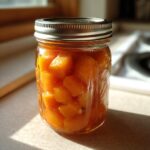
A simple guide to canning pumpkin for long-term storage.
- Prep Time: 45 minutes
- Cook Time: 55 minutes
- Total Time: 1 hour 40 minutes
- Yield: 4-6 quarts 1x
- Category: Preserving
- Method: Pressure Canning
- Cuisine: American
- Diet: Vegetarian
Ingredients
- 4–6 pounds of fresh pumpkin
- Water (for boiling)
- 1 tablespoon lemon juice per quart jar (optional, for acidity)
Instructions
- Wash and peel the pumpkin. Remove seeds and strings.
- Cut the pumpkin into 1-inch cubes.
- Bring a large pot of water to boil.
- Add pumpkin cubes and boil for 2 minutes.
- Pack hot pumpkin into sterilized jars, leaving 1-inch headspace.
- Add lemon juice if using.
- Cover with boiling water, leaving 1-inch headspace.
- Wipe jar rims, apply lids, and screw bands on fingertip tight.
- Process in a pressure canner at 10 pounds pressure for 55 minutes (adjust for altitude).
- Remove jars and let cool for 24 hours before storing.
Notes
- Use only pie pumpkins for canning – field pumpkins are too watery.
- Always use a pressure canner for low-acid vegetables like pumpkin.
- Label jars with date before storing.
Nutrition
- Serving Size: 1/2 cup
- Calories: 49
- Sugar: 2g
- Sodium: 2mg
- Fat: 0.2g
- Saturated Fat: 0.1g
- Unsaturated Fat: 0.1g
- Trans Fat: 0g
- Carbohydrates: 12g
- Fiber: 3g
- Protein: 2g
- Cholesterol: 0mg