


Oh man, do I have a confession – I’ve been addicted to sour pickles since I was six years old. My Polish grandma used to keep jars of them fermenting in her pantry, and I’d sneak bites when she wasn’t looking. That perfect tangy crunch? Pure magic. What shocked me when I finally made my own was how stupidly simple real fermented sour pickles are to make. Just cucumbers, saltwater, and patience! No fancy equipment, no mysterious ingredients – just the alchemy of time turning crisp cukes into those mouth-puckering treats we all crave. I’ll never buy store-bought again.

Why You’ll Love These Sour Pickles
Listen, once you go homemade with sour pickles, you’ll never go back to those limp grocery store imitations. Here’s why this recipe will become your new obsession:
- They’re alive! These real fermented pickles are packed with gut-friendly probiotics – way better for you than vinegar-soaked imposters.
- Custom crunch is king. Love garlic? Add extra cloves. Want heat? Toss in some chili flakes. You’re the boss of your brine here.
- Cheaper than chips. For the price of one fancy jar at the store, you can make a whole batch that’ll last weeks.
- No weird chemicals. Just cucumbers, salt, and spices doing their natural fermentation magic – no preservatives or artificial anything.
- So satisfying to make. There’s something magical about watching your countertop science project bubble away into tangy perfection.
Trust me, once you taste that first crisp, sour bite of your homemade batch, you’ll be hooked just like I was at Grandma’s house all those years ago.
Sour Pickles Ingredients
Gather these simple ingredients – I promise you probably have most of them already! The magic happens when they all come together in that brine.
- 4 cups water – Filtered or spring water works best if your tap water has strong chlorine taste
- 1/4 cup kosher salt – Not table salt! I’ll explain why below
- 4-5 small cucumbers – About 4 inches long (pickling or Persian cucumbers work great)
- 2 cloves garlic, smashed – Just give ’em a good whack with your knife to release flavor
- 1 tsp black peppercorns – Whole, not ground
- 1 tsp mustard seeds – Yellow or brown both work
- 2 bay leaves – The secret flavor booster!
Ingredient Notes & Substitutions
Here’s why these specific ingredients matter, plus some easy swaps if you need them:
Kosher salt is non-negotiable – Iodized table salt can make your brine cloudy and give off flavors. The anti-caking agents in some salts can even inhibit fermentation. Diamond Crystal is my go-to.
Small cucumbers = better crunch – Big slicing cukes get mushy fast. If you can only find larger ones, slice them into spears first. Kirby or Persian cukes hold up best.
Spice alternatives: Out of mustard seeds? Try 1/2 tsp dill seeds instead. Not a garlic fan? Skip it! The bay leaves add depth, but in a pinch, you could use 1/4 tsp dried thyme.
See? Simple ingredients, endless possibilities. Now let’s get these babies fermenting!
How to Make Sour Pickles
Alright, let’s turn these humble cucumbers into tangy perfection! I’ll walk you through each step just like my grandma showed me – it’s easier than you think, but there are a few tricks to get that perfect crunch and sour bite.
Preparing the Brine
First things first – the brine is your pickle’s lifeblood! In a large measuring cup or bowl, combine 4 cups water with 1/4 cup kosher salt. I like to use warm (not hot) water to help the salt dissolve faster – just stir until all those salt crystals disappear. Pro tip: If you see any undissolved salt at the bottom, your pickles won’t ferment evenly.
And please, for the love of crunchy pickles, don’t use iodized salt! That iodine can interfere with fermentation and make your brine cloudy. I learned that the hard way with my first failed batch.
Packing the Jar
Now for the fun part! Grab your clean quart jar and start layering:
- First, the spices – Toss in those smashed garlic cloves, peppercorns, mustard seeds, and bay leaves. They’ll flavor the brine from the bottom up.
- Then, the cucumbers – Pack them in snugly but gently. You want them cozy without squishing – think Tetris, not a wrestling match! If they’re too long, you can cut them in half lengthwise.
Leave about 1 inch of space at the top – the cucumbers will release liquid as they ferment. Pour your brine over everything until completely submerged. If any floaters rebel, wedge a small cabbage leaf or fermentation weight on top to keep them underwater.
Fermentation Process
Here’s where the magic happens! Cover your jar loosely with a lid (don’t tighten it – gas needs to escape) or use a clean cloth secured with a rubber band.
Now the waiting game: let it sit at room temperature (65-75°F is ideal) for 3-5 days. I always put mine on the kitchen counter where I can admire the bubbles forming – that’s the good bacteria doing their thing!
Every day, give your jar a little swirl and peek inside. You should see tiny bubbles and maybe some harmless white foam. If you spot any fuzzy mold (super rare if everything’s submerged), just skim it off. Start tasting after day 3 – when they’re sour enough for you, pop them in the fridge to slow down fermentation.
Pro tip: The warmer your kitchen, the faster they’ll ferment. My summer batches are usually ready in 3 days, while winter ones might take 5. Trust your taste buds!
Sour Pickles Success Tips
After making more batches of sour pickles than I can count (and yes, a few flops along the way), I’ve learned these foolproof tricks for pickle perfection every time:
- Keep those cukes underwater! Any floating bits will grow mold faster than you can say “fermentation.” I use a small glass fermentation weight, but a clean stone or even a cabbage leaf folded to fit works in a pinch.
- Temperature is everything. 65-75°F is the sweet spot. Too cold and fermentation crawls; too hot and your pickles might get mushy. My kitchen window gets afternoon sun – not ideal! I tuck my jars in a cooler spot.
- Taste daily after day 2. Sour pickles are like people – they develop at their own pace! In summer, mine are often perfect by day 3, but winter batches might need 5 days. When they make your lips pucker just right, into the fridge they go.
- Bubbles are beautiful. Seeing those little carbonation bubbles? That’s your good bacteria working! But if you see thick white scum, don’t panic – just skim it off with a clean spoon. Only toss if anything smells funky (trust your nose).
- Cleanliness counts. I wash my hands extra well and give jars a hot soapy rinse first. No need to sterilize, but you don’t want rogue microbes crashing the fermentation party.
Follow these tips, and you’ll be crunching on perfect sour pickles before you know it. My grandma would be proud!
Storing and Serving Sour Pickles
Okay, your sour pickles have reached that perfect tangy crunch – now what? Here’s how to keep them happy and all my favorite ways to enjoy them:
Storing your sour pickles: Once they’re fermented to your liking (usually 3-5 days), screw the lid on tight and move them to the fridge. The cold slows down fermentation so they don’t get too sour. They’ll keep for at least 3-4 weeks this way, though mine never last that long before getting devoured!
Pro tip: The brine gets more flavorful over time – I’ve kept batches for 2 months with no issues. Just give them a sniff if you’re unsure; good sour pickles should smell pleasantly tangy, never funky.
Serving ideas that’ll make you a pickle superstar:
- Classic burger topper – My absolute favorite! That cool crunch cuts through juicy burgers like nothing else.
- Snack attack – Straight from the jar, obviously. I keep a container of spears in the fridge for when that salty craving hits.
- Potato salad booster – Chop them up and mix into your next batch for an extra zing.
- Bloody Mary’s best friend – A sour pickle spear makes the ultimate cocktail garnish (the brine makes great micheladas too!).
- Chopped in tuna/chicken salad – Adds way more flavor than boring relish.
Here’s my weird-but-awesome trick: I save the leftover brine to marinate chicken before grilling. The acidity tenderizes the meat and gives it this incredible savory-sour kick. Waste not, right?
However you serve them, just promise me one thing – let them come to room temperature for about 10 minutes before eating. Cold dulls flavors, and you want every bit of that tangy goodness shining through!
Sour Pickles Nutritional Information
Now, I’m no nutritionist, but let me break down why these homemade sour pickles are way smarter than grabbing a bag of chips when that salty craving hits. Here’s the scoop per pickle (about 3 inches long):
- Calories: About 5 – basically nothing! I’ve eaten three in a row and didn’t feel one bit guilty.
- Sodium: Roughly 300mg – yeah, it’s salty, but that’s the point! Way less than most processed snacks.
- Carbs: Just 1g – the fermentation process eats up most of the cucumber’s natural sugars.
- Fat/Protein: Zilch – but who eats pickles for protein anyway?
- Bonus: Those live probiotics? Priceless for gut health.
A quick heads up – these numbers can wiggle a bit depending on your cucumber size and exactly how long you ferment them. My summer batches tend to be slightly lower in carbs than winter ones (warmer temps = more sugar eaten by the bacteria).
Compared to store-bought vinegar pickles, your homemade sour pickles have about half the sodium and none of the weird preservatives or food dyes. Just pure, tangy goodness in every crunchy bite!
Sour Pickles FAQs
Over the years, I’ve gotten all sorts of pickle questions from friends trying this recipe for the first time. Here are the ones that come up most often – with my hard-earned answers from countless batches!
Can I reuse the brine?
Absolutely! I often use my pickle brine for round two. Just add fresh cucumbers (and maybe a pinch more salt) and let it ferment again. The brine gets more flavorful each time! But toss it if it gets cloudy or smells off – usually good for 2-3 batches.
Why are my pickles soft instead of crunchy?
Oh man, I’ve been there! Usually it’s one of three things: cucumbers that weren’t super fresh to begin with, fermenting in too warm a spot (above 75°F), or not using bay leaves (their tannins help keep cukes crisp). Next time, try adding an oak or grape leaf too!
Is that white stuff mold?
Probably not! A thin white film or sediment is totally normal – that’s just harmless yeast doing its thing. Real mold would be fuzzy and colorful (blue/green). If you see that, sadly it’s toss time. But white stuff? Just skim it off and carry on!
How do I know when they’re done fermenting?
Your taste buds are the best judge! Start checking after 2-3 days – when they’ve got that perfect lip-puckering sourness you love, they’re done. I like mine at day 4 usually. Remember: fridge time slows fermentation way down.
Can I add other veggies to the jar?
You bet! Cauliflower, green beans, and carrot sticks all ferment beautifully in pickle brine. Just keep similar sizes together so everything ferments evenly. My garlic-dill green beans might just steal the pickle’s spotlight!
Share Your Sour Pickles Story
You know what I love most about this sour pickles recipe? Hearing how it turns out in other kitchens! Whether it’s your first fermentation adventure or your hundredth batch, I’d be tickled to hear about your pickle journey. Check out our Pinterest for more ideas!
Did your kids make faces at the bubbling jar? Did your partner accidentally drink the brine thinking it was juice? (True story – happened to my cousin!) Maybe you got creative with spices and discovered an amazing new flavor combo. Every jar tells a story, and I’m all ears for yours.
Drop a note below about your sour pickle experiments – the triumphs, the funny fails, the “why didn’t I try this sooner?” moments. Your tips might just help another pickle newbie avoid the mushy-cuke heartbreak I suffered through on batch number three!
Happy fermenting, friends. May your pickles always be crisp and your brine always bubble merrily.
PrintGrandma’s Secret 5-Day Sour Pickles Recipe You’ll Crave
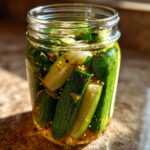
Tangy and crunchy sour pickles made with fresh cucumbers and a simple brine.
- Prep Time: 10 mins
- Cook Time: 0 mins
- Total Time: 3-5 days
- Yield: 1 quart 1x
- Category: Fermented Foods
- Method: Fermentation
- Cuisine: International
- Diet: Vegetarian
Ingredients
- 4 cups water
- 1/4 cup salt
- 4–5 small cucumbers
- 2 cloves garlic, smashed
- 1 tsp black peppercorns
- 1 tsp mustard seeds
- 2 bay leaves
Instructions
- Dissolve salt in water to make the brine.
- Pack cucumbers, garlic, peppercorns, mustard seeds, and bay leaves into a clean jar.
- Pour brine over cucumbers until fully submerged.
- Cover loosely and let ferment at room temperature for 3-5 days.
- Transfer to the refrigerator when desired sourness is reached.
Notes
- Use pickling or kosher salt, not iodized salt.
- Keep cucumbers submerged to prevent mold.
- Taste daily during fermentation.
Nutrition
- Serving Size: 1 pickle
- Calories: 5
- Sugar: 0g
- Sodium: 300mg
- Fat: 0g
- Saturated Fat: 0g
- Unsaturated Fat: 0g
- Trans Fat: 0g
- Carbohydrates: 1g
- Fiber: 0g
- Protein: 0g
- Cholesterol: 0mg