

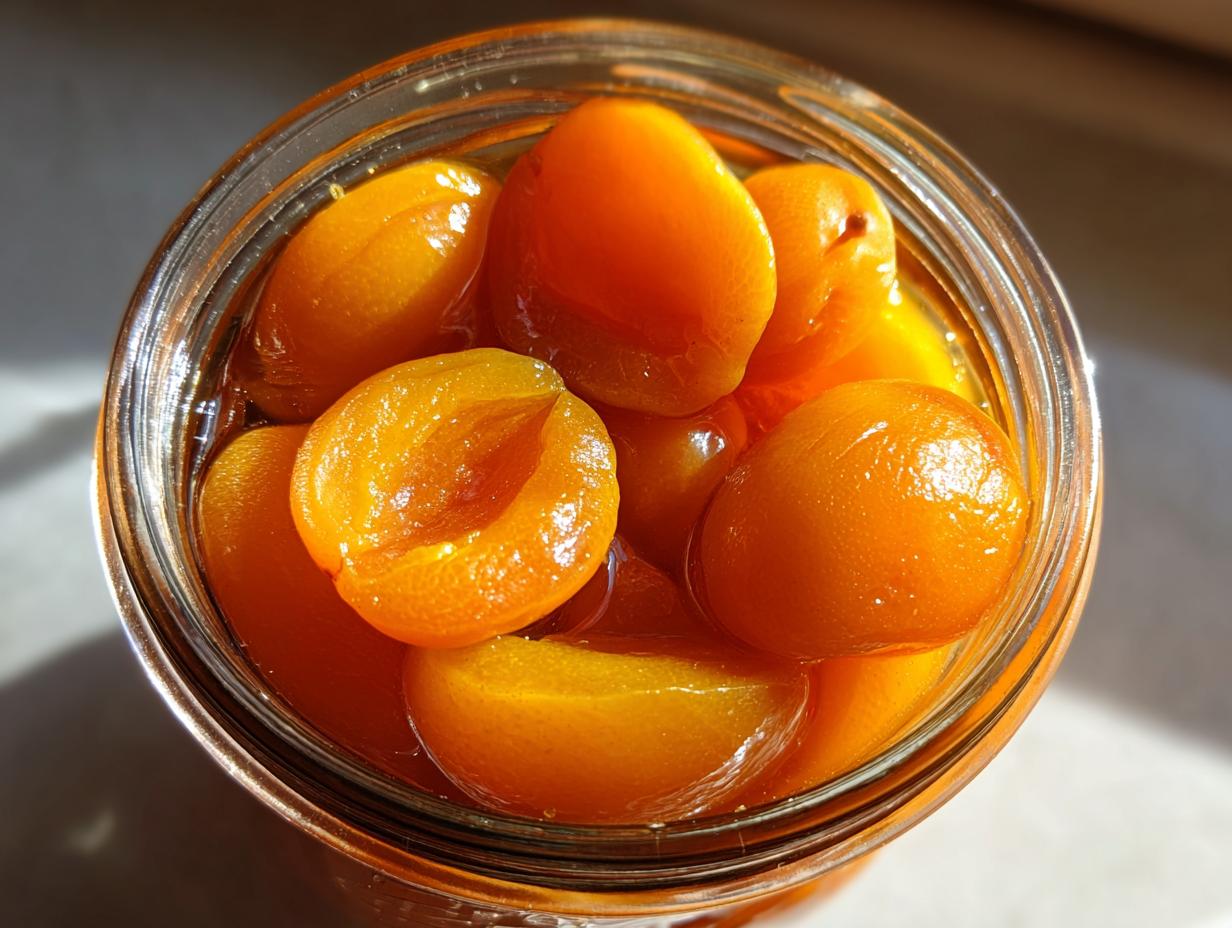
There’s nothing quite like biting into a sweet, sun-ripened apricot in the middle of summer—that burst of golden flavor is pure joy. But what about when apricot season ends? That’s where canning apricots comes in! Trust me, once you taste homemade canned apricots in December, you’ll never go back to store-bought. I’ve been putting up jars of these beauties every summer since my grandmother taught me, and it’s easier than you think. Just imagine opening a jar of summer sunshine to top your oatmeal or bake into a cobbler when snow’s on the ground. Let me show you how simple and satisfying canning apricots can be!
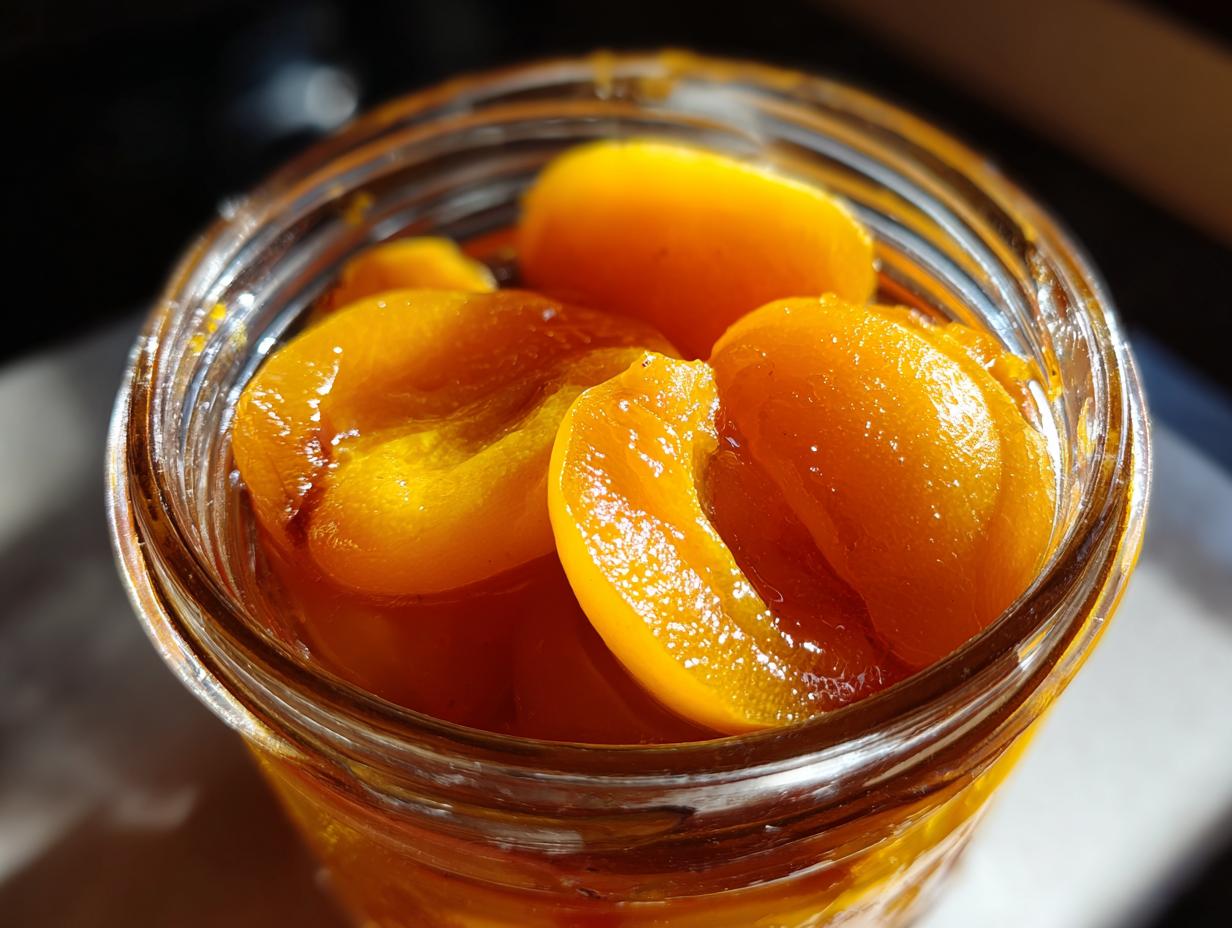
Why You’ll Love Canning Apricots
Oh, where do I even start? Canning apricots is one of those kitchen magic tricks that feels like cheating—but in the best way possible! Here’s why I’m obsessed:
- Summer in a jar: Nothing beats opening a jar in January and getting hit with that fresh apricot aroma. It’s like bottling sunshine!
- Wallet-friendly: When apricots are in season and cheap, you can stock up. Way cheaper than buying canned fruit later.
- Super versatile: My canned apricots go straight into yogurt, pies, or even savory dishes (trust me, they’re amazing with pork!).
- Easier than you think: If you can boil water and use a jar, you’ve got this. My 12-year-old niece does it now!
Seriously, once you taste your own canned apricots, you’ll wonder why you didn’t start sooner.
Ingredients for Canning Apricots
Okay, let’s gather our golden treasures! Here’s exactly what you’ll need for perfect canned apricots (and yes, I’ve learned the hard way—measurements matter!):
- 4 lbs fresh apricots (halved and pitted—get ones that are firm but give slightly when pressed)
- 2 cups granulated sugar (adjust up or down by 1/2 cup depending on your sweet tooth)
- 4 cups water (filtered if your tap water tastes funky)
- 1/4 cup lemon juice (fresh squeezed or bottled—both work, but fresh gives a brighter flavor)
- 1 tsp vanilla extract (my secret weapon! Totally optional but adds cozy depth)
That’s it! Simple, right? Now let’s turn these basics into something magical.
Equipment Needed for Canning Apricots
Before we dive in, let’s round up our trusty tools—I promise you probably have most of this already! Here’s your canning apricots toolkit:
- Jars with lids & bands (pint or quart—I love wide-mouth for easy packing)
- Boiling water bath canner (or any deep pot with a rack if you’re improvising)
- Large saucepan (for that glorious syrup)
- Jar lifter (saves fingers from boiling water disasters!)
- Canning funnel (no more sticky syrup dribbles down jar sides)
- Bubble remover/chopstick (to nudge out trapped air pockets)
- Clean towels (for wiping rims—this step is CRUCIAL for good seals)
Pro tip: Everything needs to be sparkling clean—sterilize those jars like you’re prepping for surgery! I run mine through the dishwasher right before using them for extra security.
How to Can Apricots Step by Step
Alright, let’s get these golden beauties into jars! I’ll walk you through each step like I’m right there in your kitchen with you. Don’t worry—it’s easier than it sounds, and soon you’ll be canning apricots like a pro!
Preparing the Apricots
First things first—give those apricots some love! Wash them gently under cool water (no soap!). Now comes the fun part: halving them. I just twist them apart along the natural seam, pop out the pit with my fingers (or a spoon if they’re stubborn), and admire that gorgeous orange flesh. Pro tip: Use apricots that are ripe but still firm—overripe ones turn to mush during processing.
Making the Syrup
Time to make magic! In your saucepan, combine the sugar, water, and lemon juice (and vanilla if you’re feeling fancy). Stir it over medium heat until the sugar dissolves completely—no gritty bits! Once it comes to a rolling boil, reduce the heat to a gentle simmer. This sweet syrup is what’ll keep your apricots tasting fresh all year.
Packing and Sealing the Jars
Here’s where things get real! Pack those apricot halves snugly into your sterilized jars—cut side down looks pretty, but honestly, just get them in there. Leave 1/2-inch headspace at the top (I use my finger as a guide). Now carefully pour the hot syrup over them, maintaining that same headspace. Grab your chopstick and gently poke around to release any trapped air bubbles—this prevents floating fruit later. Wipe the jar rims spotless with a clean, damp cloth (one speck of jam can ruin your seal!). Place the lids on and screw the bands fingertip-tight—no Hulk strength needed!
Processing the Jars
Into the boiling water bath they go! Lower your jars onto the rack using the jar lifter—careful, it’s hot! Make sure they’re covered by at least 1 inch of water. Set your timer for 20 minutes (adjust for altitude if needed). When time’s up, turn off the heat and let them sit for 5 minutes before removing—this prevents siphoning. Lift them out and set them on a towel to cool overnight. You’ll hear the most satisfying “ping” as they seal! Test each lid the next day—if it doesn’t flex when pressed, you’ve got success!
Tips for Perfect Canning Apricots
After years of canning apricots (and yes, a few messy learning experiences), here are my golden rules for foolproof results:
- Sugar flexibility: That syrup recipe is just a starting point! Reduce sugar by 1/2 cup for tart apricots or add 1/4 cup extra if you’ve got a sweet tooth.
- Fruit selection: Use apricots that yield slightly to pressure—overripe ones turn to mush during processing (learned that the hard way!).
- Acid test: If your apricots are super sweet, add an extra tablespoon of lemon juice to ensure proper preservation.
- Storage smarts: Store jars in a cool, dark place—my basement shelves work perfectly. And always label with the date!
- First-time tip: Start with just 2-3 jars your first batch. It’s easier to manage while you’re learning the ropes.
Remember—every batch teaches you something new! Don’t stress over perfection—even my “mistake” jars usually taste amazing.
Serving and Using Canned Apricots
Oh, the possibilities! My canned apricots barely last a year because we use them in everything. Toss them into morning yogurt or oatmeal for instant sunshine. They’re heavenly in cobblers or spooned over ice cream. My secret? I puree a jar to make the quickest apricot glaze for ham or chicken. The syrup alone makes killer cocktails—just add bourbon!
Storing and Shelf Life of Canned Apricots
Here’s the best part—your hard work keeps giving! Properly sealed jars will stay perfect in a cool, dark place (like a pantry or basement) for up to a year. I store mine away from heat sources and always check for spoilage signs before opening—bulging lids, odd smells, or mold mean it’s time to toss. But honestly? Mine never last that long because we’re always digging in! For peak flavor, try to use them within 8 months—though I’ve eaten 2-year-old jars (oops!) that still tasted amazing.
Nutritional Information for Canned Apricots
Let’s talk numbers—but don’t let them scare you away from enjoying these golden gems! A 1/2-cup serving of my canned apricots typically has about 120 calories, with 24g of natural sugars (that fruity sweetness you love!). You’re also getting 2g of fiber and 1g of protein per serving—not bad for something that tastes like dessert! Now, full disclosure—these numbers can wiggle a bit depending on your exact syrup sweetness and apricot size. That’s the beauty of homemade—you control what goes in! Just remember, while they’re packed with vitamin A and potassium, they’re still fruit—so enjoy them as part of a balanced diet (not that I’ve ever stopped at just one serving…).
FAQs About Canning Apricots
I get so many questions about canning apricots—here are the ones that pop up most often in my kitchen (and at family gatherings when I’m handing out jars!):
Can I use frozen apricots for canning?
Absolutely! Just thaw them first and pat dry—they’ll be softer than fresh, so handle gently. The texture changes slightly, but they still taste amazing in cobblers or sauces.
How do I know if my jars sealed properly?
That magical “ping” sound is your first clue! The next day, press the lid center—if it doesn’t move, you’re golden. Unsealed jars need refrigerating and eating soon.
Why did my apricots float to the top?
Don’t panic! This happens if air bubbles weren’t removed before processing. They’re still safe to eat—just flip the jar upside down occasionally to redistribute the fruit.
Can I reduce the sugar for diabetic-friendly apricots?
You bet! Use extra lemon juice for acidity, and consider a light syrup (1 cup sugar per 4 cups water). The texture changes slightly, but they’ll still preserve well.
How long until I can eat my canned apricots?
Technically after 24 hours, but I wait 2 weeks—the flavors meld beautifully. The syrup turns golden and the apricots soak up all that sweet-tart goodness!
5 Easy Steps to Canning Apricots That Taste Like Summer
Learn how to can apricots to preserve their freshness and enjoy them year-round.
- Prep Time: 30 minutes
- Cook Time: 30 minutes
- Total Time: 1 hour
- Yield: 4 pints 1x
- Category: Preserving
- Method: Boiling Water Bath
- Cuisine: International
- Diet: Vegetarian
Ingredients
- 4 lbs fresh apricots
- 2 cups granulated sugar
- 4 cups water
- 1/4 cup lemon juice
- 1 tsp vanilla extract (optional)
Instructions
- Wash and sterilize jars and lids.
- Cut apricots in half and remove pits.
- Combine sugar, water, and lemon juice in a saucepan to make syrup.
- Bring syrup to a boil, then reduce heat.
- Add apricot halves and simmer for 5 minutes.
- Pack hot apricots into jars, leaving 1/2-inch headspace.
- Pour hot syrup over apricots, maintaining headspace.
- Remove air bubbles and wipe jar rims.
- Seal jars with lids and bands.
- Process in boiling water bath for 20 minutes.
- Remove jars and let cool for 12 hours.
- Check seals before storing.
Notes
- Use firm, ripe apricots for best results.
- Adjust sugar in syrup to your taste.
- Store in a cool, dark place for up to 1 year.
Nutrition
- Serving Size: 1/2 cup
- Calories: 120
- Sugar: 24g
- Sodium: 5mg
- Fat: 0.5g
- Saturated Fat: 0g
- Unsaturated Fat: 0.3g
- Trans Fat: 0g
- Carbohydrates: 30g
- Fiber: 2g
- Protein: 1g
- Cholesterol: 0mg