

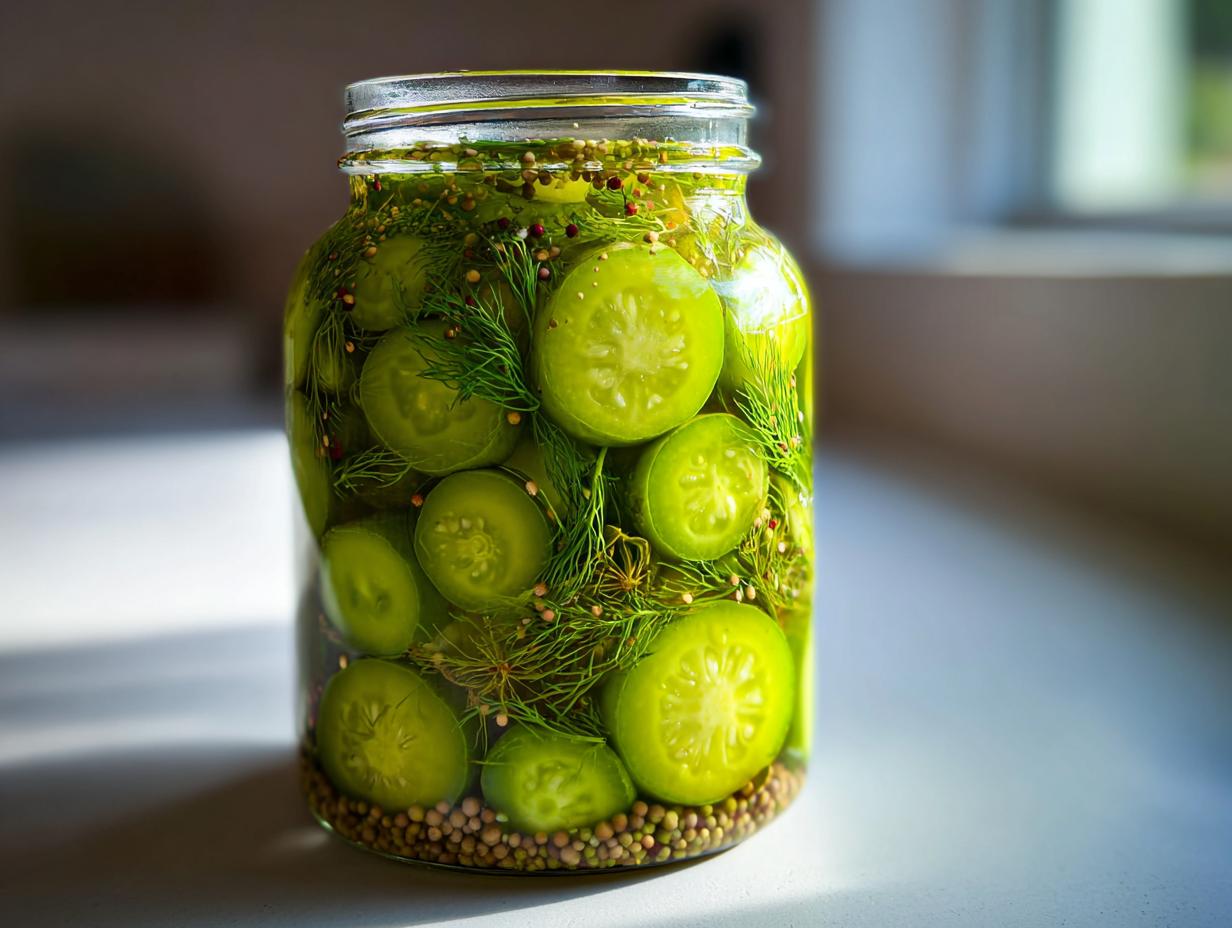
You know that bittersweet feeling at summer’s end when your garden overflows with green tomatoes that won’t ripen? I used to mourn them until my neighbor Betty taught me her grandmother’s trick—canning green tomatoes! Now I get giddy when frost threatens because it means I’ll be filling my pantry with jars of tart, crisp tomatoes that last all winter long. Trust me, once you taste home-canned green tomatoes fried up crispy or tossed into stews come January, you’ll be scanning weather reports praying for an early freeze too!
Canning green tomatoes captures that fresh-from-the-vine brightness in jars—no fancy equipment needed, just basic pantry staples and about an hour of your time.
Why You’ll Love Canning Green Tomatoes
Oh my goodness, let me count the ways this will change your preserving game:
- No waste! Those hard green globes become treasures instead of compost fodder when frost hits
- Flavor bombs – the tart crunch makes killer fried tomatoes all winter long
- Pantry power – just grab a jar to toss into soups, relishes, or even Bloody Marys anytime
- Farmer’s market savvy – stock up on end-of-season deals when tomatoes are practically free
- That satisfying “ping!” Nothing beats hearing those jar lids seal – instant kitchen victory!
Ingredients for Canning Green Tomatoes
One of my favorite parts about this recipe? You probably have most of these ingredients in your pantry right now! Here’s what you’ll need to transform those green tomatoes into shelf-stable deliciousness:
- 4 pounds green tomatoes – washed well and sliced into 1/4-inch rounds (thick enough to stay crisp!)
- 1 cup white vinegar – the acidity is key for safe preserving
- 1 cup water – filtered if your tap water is hard
- 2 tablespoons pickling salt – not table salt, which can make things cloudy
- 1 tablespoon sugar – just enough to balance the tartness
- 1 teaspoon mustard seeds – my secret for adding a subtle zing
- 1 teaspoon black peppercorns – whole, not ground, so they don’t overpower
- 2 cloves garlic, peeled (optional but oh so good) – one in each jar
- Fresh dill sprigs (optional) – because everything’s better with dill, right?
See? Nothing fancy – just honest ingredients that work magic together. The vinegar brine is what makes these shelf-stable, while the spices give them that “wow” factor when you pop open a jar months later.
Equipment Needed for Canning Green Tomatoes
Don’t stress about fancy gear – I’ve canned tomatoes with just the basics for years! Here’s what you’ll want to gather before diving in:
- Canning jars – pint or quart size with new lids (I save old ones for dry storage)
- Large pot – deep enough to cover jars with 2 inches of water
- Canning rack – keeps jars from banging on the pot bottom
- Jar lifter (so worth it!) – prevents burns when removing hot jars
- Wide-mouth funnel – makes filling jars a no-spill breeze
- Bubble remover – a chopstick works great in a pinch
That’s really it! Though I’ll admit, adding a magnetic lid lifter to my kit made me feel like a canning superhero. No more fishing for lids in boiling water with tongs!
Step-by-Step Guide to Canning Green Tomatoes
Alright, let’s get down to the good stuff! I’ll walk you through each step like I’m right there in your kitchen with you. Don’t worry if you’re new to canning – my neighbor Betty talked me through my first batch while I nervously wiped tomato juice off my forehead. You’ve got this!
Preparing the Brine
This vinegar mixture is what keeps your green tomatoes safe and shelf-stable. In your largest non-reactive pot (no aluminum!), combine the vinegar, water, pickling salt, and sugar. Crank the heat to medium-high and stir until everything dissolves completely. Once it hits a rolling boil – the kind where bubbles don’t stop when you stir – set your timer for 2 minutes. That quick boil ensures all the flavors meld perfectly. Keep it bubbling while you prep the jars – that way your brine stays piping hot when it’s time to pour!
Packing the Jars
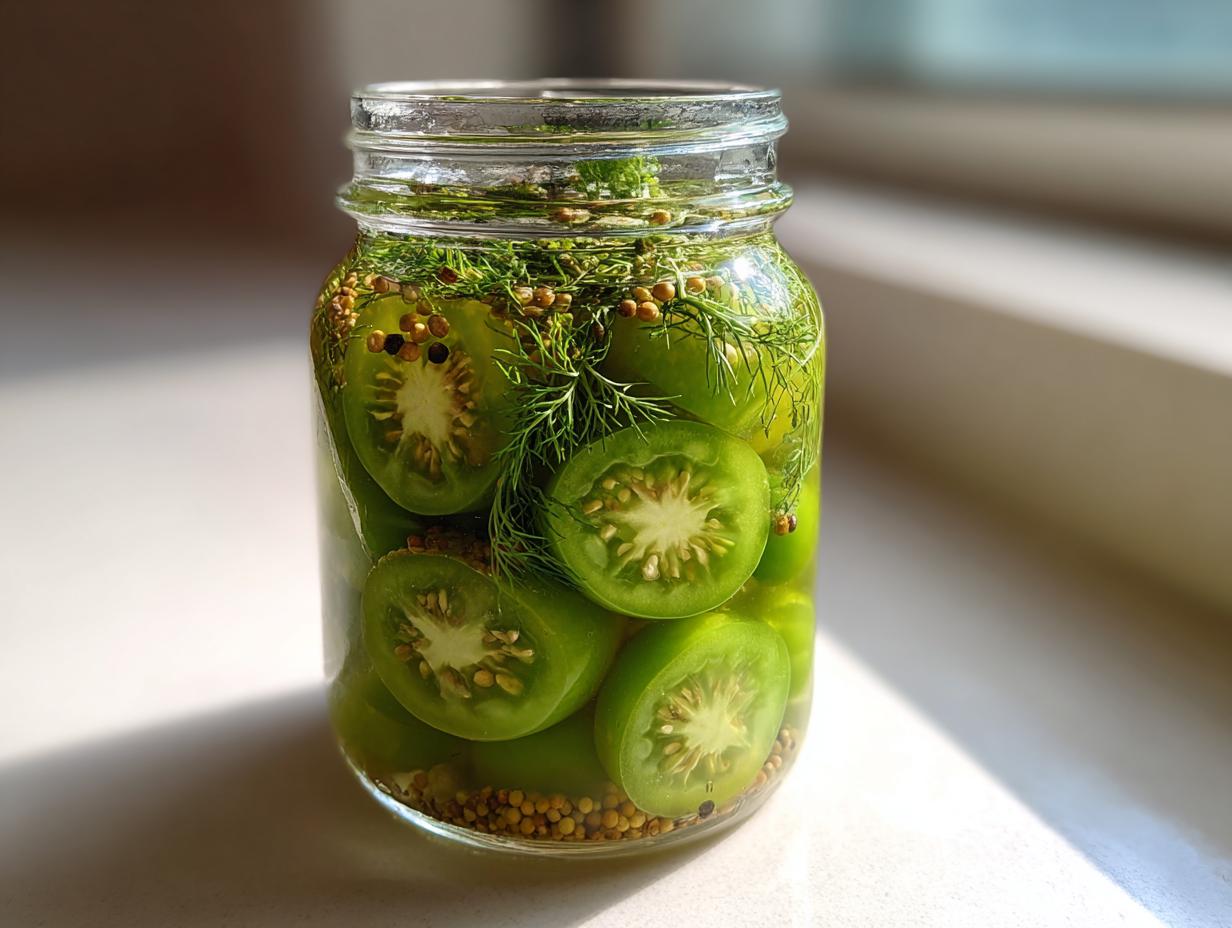
Here comes the fun part! Grab your sterilized jars from the boiling water (careful – they’re hot!) and start layering. I alternate tomato slices with spices – a few tomato rounds, then some mustard seeds and peppercorns, maybe a garlic clove if you’re feeling fancy. Pack them in there snug but not squished – think “cozy library books” not “overstuffed suitcase.” Leave about 1/2 inch of space at the top (that’s called headspace) so the jars seal properly. Pour the hot brine over the tomatoes, covering them completely but staying below that headspace line. Now grab your chopstick and gently poke around the edges to release any sneaky air bubbles – those little troublemakers can mess with your seal!
Processing the Jars
Time for the magic! Wipe each jar rim spotless (even a crumb can ruin your seal), then place the lids on finger-tight – no Hulk strength needed! Lower your jars into the boiling water bath using the canning rack, making sure they’re covered by at least 1 inch of water. Once the water returns to a full boil, set your timer for 15 minutes. You’ll hear the most satisfying “pop” sounds as the jars cool later – that’s the sound of success! After processing, carefully remove the jars and let them sit undisturbed for 24 hours. No peeking – I know it’s tempting! That cooling time is when the real sealing magic happens.
Tips for Successful Canning Green Tomatoes
After years of canning green tomatoes (and learning from my share of mistakes), here are my hard-won secrets for perfect jars every time:
- Pick perfect tomatoes – Only use firm, unblemished ones. Soft spots can ruin your whole batch!
- Spice it your way – Love heat? Add a dried chili to each jar. Prefer sweet? Up the sugar slightly.
- The seal test – After cooling, press each lid’s center. If it pops, refrigerate immediately!
- Label everything – Trust me, future-you will thank past-you when jars look identical months later.
- First-timer tip – Process one extra jar to test flavors before committing to a big batch.
Remember – canning isn’t perfection, it’s delicious preservation! Even my “ugly” jars tasted amazing come winter.
Storing and Using Canned Green Tomatoes
Oh, the possibilities once those jars are sealed! Store your canned green tomatoes in a cool, dark place (a basement or pantry shelf works perfectly) and they’ll stay delicious for up to a year. But let’s be real—they never last that long in my house! My favorite ways to use them:
- Fried green tomatoes – Drain, dredge in cornmeal, and fry for that classic Southern crunch
- Stews and chilis – Adds bright acidity to balance rich meats
- Bloody Mary garnish – Far better than celery sticks!
- Relish base – Chop and mix with onions for a zesty condiment
Pro tip: The brine makes an incredible salad dressing base too—never pour it out!
Nutritional Information for Canned Green Tomatoes
Now let’s talk about what’s actually in those gorgeous jars of green goodness! Remember, these numbers are estimates since your spice amounts might vary slightly from mine. But here’s the scoop per 1/2 cup serving:
- 25 calories – practically guilt-free snacking!
- 2g sugar – just enough to balance the tartness
- 300mg sodium – from that essential pickling salt
- 1g fiber & 1g protein – bonus nutrients from the tomatoes
- 0g fat – until you fry them up, that is
The vinegar brine adds negligible calories while boosting acidity for safe preserving—nature’s perfect package!
Frequently Asked Questions About Canning Green Tomatoes
I’ve gotten so many great questions from readers about canning green tomatoes over the years – let me share the ones that come up most often!
Can I use ripe tomatoes instead of green ones?
Oh honey, I wouldn’t! Ripe tomatoes turn to mush in the canning process. The firm texture of green tomatoes holds up beautifully. If you’ve got mostly ripe ones, make sauce instead!
How long do canned green tomatoes last?
Properly processed jars will keep for a full year in your pantry. But the real question is – can you resist eating them that long? I never can!
Why is my brine cloudy?
Don’t panic! Cloudiness usually means you used table salt instead of pickling salt. It’s totally safe to eat, just not as pretty. Next time, grab the pickling salt.
Can I skip the water bath processing?
Absolutely not – that boiling water bath is what makes them shelf-stable! Refrigerator pickles are an option if you’re short on time, but they won’t last nearly as long.
Have your own canning questions or success stories? I’d love to hear them! Drop your experiences in the comments below – your tip might help another home canner nail their first batch. You can also find more great canning ideas on Pinterest.
Print“Canning Green Tomatoes: 5 Genius Ways to Preserve Summer’s Bounty”
Learn how to can green tomatoes to preserve them for later use. This method ensures you can enjoy your harvest all year round.
- Prep Time: 30 minutes
- Cook Time: 15 minutes
- Total Time: 45 minutes
- Yield: 4 pints 1x
- Category: Preserving
- Method: Water Bath Canning
- Cuisine: American
- Diet: Vegetarian
Ingredients
- 4 pounds green tomatoes, washed and sliced
- 1 cup white vinegar
- 1 cup water
- 2 tablespoons pickling salt
- 1 tablespoon sugar
- 1 teaspoon mustard seeds
- 1 teaspoon black peppercorns
- 2 cloves garlic, peeled (optional)
- Fresh dill sprigs (optional)
Instructions
- Sterilize jars and lids by boiling them for 10 minutes.
- Slice green tomatoes into 1/4-inch thick rounds.
- In a pot, combine vinegar, water, pickling salt, and sugar. Bring to a boil.
- Pack tomato slices tightly into sterilized jars, leaving 1/2-inch headspace.
- Add mustard seeds, peppercorns, garlic, and dill to each jar.
- Pour hot brine over tomatoes, covering them completely.
- Remove air bubbles by tapping the jar gently.
- Wipe jar rims clean and seal with sterilized lids.
- Process jars in a boiling water bath for 15 minutes.
- Remove jars and let them cool for 24 hours before storing.
Notes
- Use firm, unblemished green tomatoes for best results.
- Adjust spices to your taste preference.
- Store canned tomatoes in a cool, dark place for up to 1 year.
- Check seals before storing—lids should not flex when pressed.
Nutrition
- Serving Size: 1/2 cup
- Calories: 25
- Sugar: 2g
- Sodium: 300mg
- Fat: 0g
- Saturated Fat: 0g
- Unsaturated Fat: 0g
- Trans Fat: 0g
- Carbohydrates: 5g
- Fiber: 1g
- Protein: 1g
- Cholesterol: 0mg