


You know those days when you come home exhausted, craving something warm and comforting, but the thought of starting from scratch makes you want to order takeout instead? That’s exactly why I fell in love with canning fish chowder base. One stormy afternoon last winter, I pulled a jar of this golden goodness from my pantry, added some fresh cod, and had steaming bowls of chowder on the table faster than delivery could arrive. It’s become my secret weapon for quick, nourishing meals.
This canning fish chowder base is more than just a time-saver – it’s like preserving a hug in a jar. The rich, creamy broth with tender vegetables forms the perfect foundation that transforms in minutes when you’re ready to eat. Whether you add fresh seafood, clams, or even just some extra cream, it’s endlessly adaptable. What I adore most is opening my pantry to see those neatly lined jars, each one representing a future cozy meal when I need it most.

Why You’ll Love This Canning Fish Chowder Base
This recipe changed my weeknight dinner game forever, and here’s why it’ll do the same for you:
- Instant comfort food: Nothing beats popping open a jar after a long day and having chowder ready in minutes – just add fresh fish!
- Pantry powerhouse: Those jars lining your shelf mean you’re always just one step away from homemade seafood goodness.
- Flavor that deepens: Like fine wine, this base gets better with time – the spices mingle beautifully during storage.
- Endless variations: Use it as-is or dress it up with shrimp, clams, or crispy bacon when reheating.
- Homemade control: You know exactly what’s in it – no mystery ingredients or excessive salt.
Trust me, once you taste that first spoonful of creamy, briny perfection, you’ll wonder how you ever lived without jars of this magic!
Ingredients for Canning Fish Chowder Base
Here’s what you’ll need to make this magical chowder base – and yes, every single ingredient matters! I learned the hard way that skimping on quality here makes a world of difference in the final product.
- 2 lbs white fish fillets (cod, haddock, or similar – cut into 1-inch chunks) – please, please use fresh! Frozen just doesn’t give the same silky texture.
- 4 cups fish stock (or water in a pinch, but stock adds so much depth)
- 2 cups diced potatoes (I like Yukon Gold – cut them small so they cook evenly)
- 1 cup diced onions (finely chopped – they should practically disappear into the broth)
- 1 cup diced celery (include those flavorful leaves!)
- 1 cup diced carrots (small dice means no crunchy surprises)
- 1/2 cup unsalted butter (the real deal – this is no time for margarine)
- 1/2 cup all-purpose flour (for that perfect thickness)
- 2 cups whole milk (trust me, low-fat just won’t cut it here)
- 1 tsp salt (adjust to taste after canning)
- 1/2 tsp black pepper (freshly ground if you can)
- 1/2 tsp dried thyme (that little herbal note makes all the difference)
Pro tip from my many trials: Buy your fish the same day you’ll be canning – that fresh ocean flavor really comes through after months in the jar!
Equipment Needed for Canning Fish Chowder Base
Listen, I know canning might seem intimidating at first, but having the right tools makes all the difference. Here’s what you’ll want within arm’s reach:
- Large, heavy-bottomed pot (for cooking your chowder base – trust me, you don’t want it scorching!)
- Pressure canner (this isn’t optional – water bath canning isn’t safe for low-acid foods like fish)
- Sterilized pint jars with new lids and rings (I always prepare a few extra just in case)
- Wide-mouth funnel (for mess-free filling – you’ll thank me later)
- Jar lifter (those babies get hot!)
- Bubble remover tool (or use a clean chopstick – it matters more than you’d think)
Safety first – always check your canner’s seal and gauge before starting, and follow the manufacturer’s instructions to the letter. Happy canning is safe canning!
How to Make Canning Fish Chowder Base
Alright, let’s get cooking! This process is easier than you think, but there are a few key steps that make all the difference between good chowder and great chowder. Follow along, and you’ll have jars of golden deliciousness ready for your pantry in no time.
Preparing the Vegetables and Roux
First things first – melt that butter in your big pot over medium heat. You’ll know it’s ready when it stops foaming. Now toss in those onions, celery, and carrots. Stir them around until they get soft and smell amazing – about 5 minutes should do it. Don’t rush this step! Those veggies are building your flavor foundation.
Next comes the roux – sprinkle in the flour and keep stirring. You want it to cook for about 2 minutes until it smells nutty but not burned. This is your thickening magic right here! The mixture should look like wet sand when it’s perfect.
Simmering the Chowder Base
Now slowly whisk in your fish stock and milk. Go gradually at first – you don’t want lumps! Once it’s smooth, add the potatoes, salt, pepper, and thyme. Let it bubble gently until the potatoes are tender when poked with a fork – usually about 15 minutes. The broth should coat the back of a spoon nicely at this point.
Adding the Fish and Canning
Here’s where the magic happens! Gently stir in your fish chunks and cook just until they turn opaque – about 5 minutes max. Overcooked fish turns rubbery, and nobody wants that!
While the fish cooks, keep your jars hot in simmering water. Ladle the hot chowder into sterilized jars, leaving 1-inch headspace. Remove any air bubbles with a chopstick, wipe the rims clean, and seal with lids. Process in your pressure canner at 10 psi for 90 minutes (adjust for altitude). Safety first – always follow your canner’s instructions to the letter!
When time’s up, turn off the heat and let the pressure drop naturally. Those beautiful jars will be ready to store once they’re completely cool. Just listen for that satisfying “ping” as they seal!
Tips for Perfect Canning Fish Chowder Base
After years of canning this chowder base (and learning from my mistakes!), here are my hard-earned secrets for perfect results every time:
- Seal check is sacred: Always press the center of cooled lids – if it pops, refrigerate and eat within a week. Properly sealed jars store for a year!
- Altitude matters: Add 1 psi for every 1,000 feet above sea level when pressure canning – my cousin in Denver learned this the hard way.
- Less salt now, more later: The flavors intensify during storage, so go light on seasoning – you can always add more when reheating.
- Bubble patrol: Run a chopstick around the inside of each jar before sealing – trapped air affects quality and safety.
- Label clearly: Include the date and “Add fresh fish” reminder – future you will be grateful!
Remember, good canning is slow and steady – rushing leads to broken jars or worse. Take your time and enjoy the process!
Serving Suggestions for Canned Fish Chowder Base
Oh, the possibilities! My favorite part is how this canned fish chowder base transforms with just a little creativity. When reheating, I love tossing in fresh chunks of cod or haddock – they cook perfectly in the hot broth. For special occasions, I’ll add plump shrimp or clams during the last few minutes of heating.
Don’t forget the finishing touches! A sprinkle of fresh parsley or chives brightens everything up, while a pat of butter swirled in at the end adds luxurious richness. And please – serve with crusty bread for dipping. That first bite of warm, buttery bread soaked in creamy chowder? Absolute heaven!
Storing and Reheating Canning Fish Chowder Base
Properly processed jars of this fish chowder base will keep beautifully for up to a year in a cool, dark pantry – but trust me, it never lasts that long in my house! Always store jars without the rings to prevent moisture buildup, and check seals periodically. If a lid pops or bulges, toss it immediately (safety first!).
When you’re ready to enjoy, simply empty a jar into a pot and heat gently to a simmer. This is when I add fresh seafood – about 5 minutes for fish chunks, just until cooked through. Never boil violently or you’ll break that perfect creamy texture. And always, always give it a sniff test before serving – fresh-from-the-ocean aroma means it’s good to go!
Nutrition Information for Canning Fish Chowder Base
Here’s the skinny on this rich chowder base (per 1 cup serving): about 250 calories with 18g protein to keep you satisfied, 12g fat for that silky mouthfeel (7g saturated – hey, butter makes it better!), and 18g carbs from those wholesome veggies. Remember, these numbers dance a bit depending on your exact ingredients – my heavy pour of cream might skew things!
FAQs About Canning Fish Chowder Base
Q1. Can I use different types of fish in this chowder base?
Absolutely! While cod and haddock are my go-to choices, any mild white fish works beautifully. Just avoid super oily fish like salmon – they can change the flavor profile dramatically during storage. Freshness is key though – never use fish that’s even slightly “off” smelling.
Q2. Is it safe to water bath can fish chowder instead of pressure canning?
No way – and this is non-negotiable! Fish is a low-acid food that requires the high heat of pressure canning to be safely preserved. Water bath canning won’t reach the necessary temperature to prevent dangerous bacteria. My grandma’s old Ball Blue Book taught me this lesson years ago – always pressure can fish products.
Q3. How can I tell if my canned chowder base has gone bad?
Watch for warning signs: bulging lids, leaking jars, or any funky odors when opening. The liquid should be creamy, not separated or bubbly. When in doubt, throw it out! I always do the “sniff test” – good chowder smells like the ocean, not sour or metallic.
Q4. Can I freeze this chowder base instead of canning it?
You can, but the texture changes. Freezing tends to make the potatoes grainy and the sauce separate. Canning preserves that perfect creamy consistency much better. But if you must freeze, do it in airtight containers for up to 3 months and expect to whisk vigorously when reheating.
Ready to stock your pantry with this game-changing chowder base? Trust me – your future self will thank you on those busy nights! And if you try it, I’d love to hear how it turns out – tag me with your canning adventures! Check out more canning ideas!
PrintCanning Fish Chowder Base: 3 Secrets to Hearty Homemade Comfort
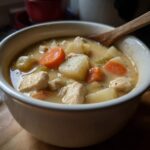
A hearty fish chowder base perfect for canning and storing. This base allows you to quickly prepare a delicious fish chowder anytime by adding fresh fish or seafood when ready to serve.
- Prep Time: 20 minutes
- Cook Time: 30 minutes
- Total Time: 50 minutes
- Yield: 6 pints 1x
- Category: Soup
- Method: Canning
- Cuisine: American
- Diet: Low Lactose
Ingredients
- 2 lbs white fish fillets (cod, haddock, or similar), cut into chunks
- 4 cups fish stock or water
- 2 cups diced potatoes
- 1 cup diced onions
- 1 cup diced celery
- 1 cup diced carrots
- 1/2 cup unsalted butter
- 1/2 cup all-purpose flour
- 2 cups whole milk
- 1 tsp salt
- 1/2 tsp black pepper
- 1/2 tsp dried thyme
Instructions
- In a large pot, melt butter over medium heat.
- Add onions, celery, and carrots. Cook until softened, about 5 minutes.
- Stir in flour and cook for 2 minutes to make a roux.
- Gradually whisk in fish stock and milk until smooth.
- Add potatoes, salt, pepper, and thyme. Simmer until potatoes are tender, about 15 minutes.
- Add fish chunks and cook for 5 minutes until just done.
- Ladle hot chowder into sterilized canning jars, leaving 1-inch headspace.
- Process jars in a pressure canner at 10 psi for 90 minutes (adjust for altitude).
Notes
- Use fresh, high-quality fish for best results.
- You can add clams or shrimp when reheating the canned base.
- Always check jar seals before storage.
- Label jars with contents and date.
Nutrition
- Serving Size: 1 cup
- Calories: 250
- Sugar: 5g
- Sodium: 450mg
- Fat: 12g
- Saturated Fat: 7g
- Unsaturated Fat: 4g
- Trans Fat: 0g
- Carbohydrates: 18g
- Fiber: 2g
- Protein: 18g
- Cholesterol: 65mg