


There’s nothing quite like capturing summer in a jar, and canning rhubarb juice is my favorite way to preserve that bright, tangy flavor all year long. I remember my first batch – I was nervous about the whole process, but trust me, it’s way easier than you think! This simple method turns those gorgeous pink stalks into a versatile juice you can enjoy straight, mix into cocktails, or even use in desserts. The best part? Once you’ve got those jars sealed, they’ll keep for ages in your pantry. My grandma taught me this trick decades ago, and now I’m hooked – there’s always a few jars tucked away for when I need a taste of sunshine in the middle of winter.
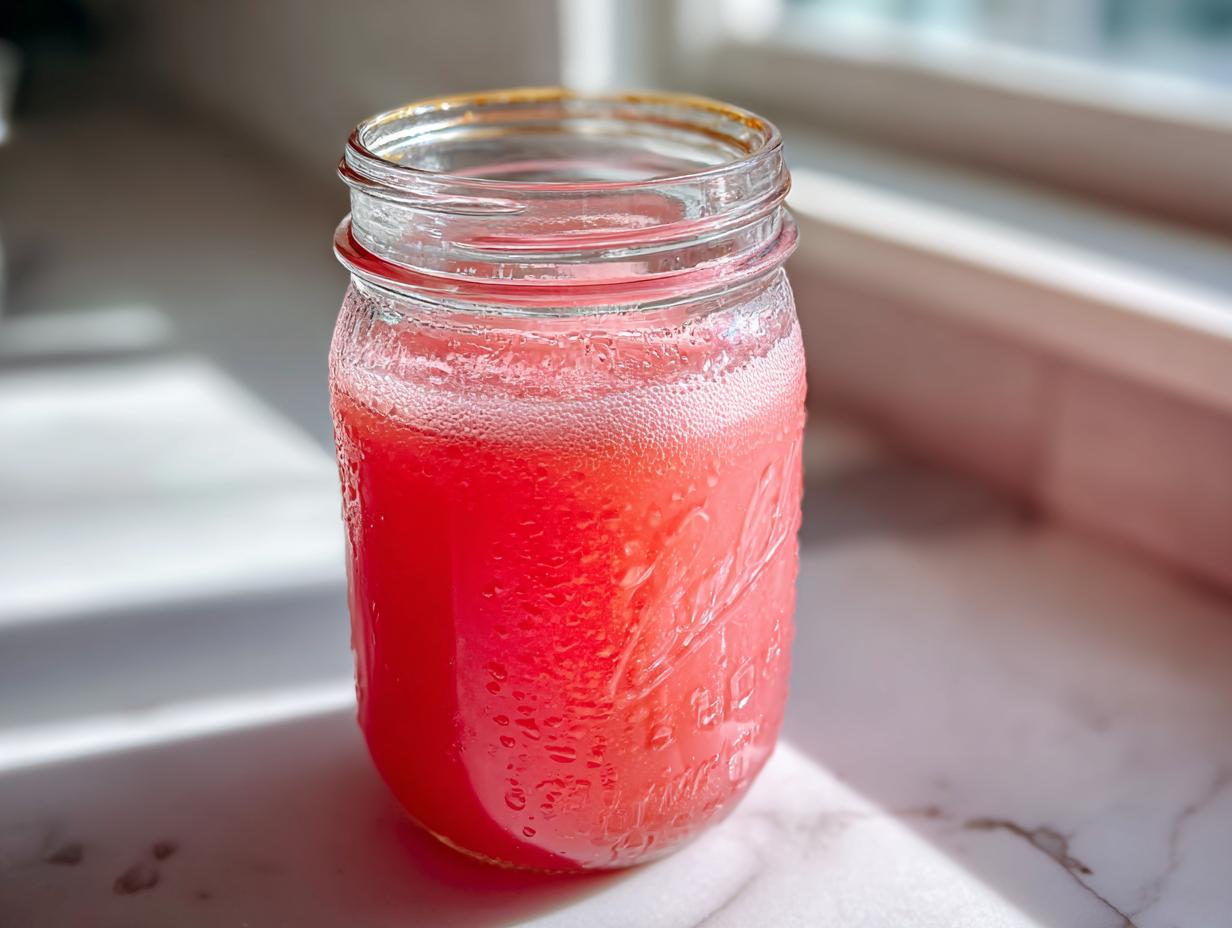
Why You’ll Love Canning Rhubarb Juice
Once you try this method, you’ll wonder why you didn’t start sooner! Here’s what makes it so special:
- So simple – Just rhubarb, water, and sugar (plus a squeeze of lemon if you’re feeling fancy)
- That perfect tang – The tartness cuts through summer heat like nothing else
- Preserves that just-picked taste – Even in January, you’ll swear you’re biting into fresh stalks
- Endless possibilities – Sip it chilled, mix it in lemonade, or even use it in baking
My neighbor Linda tried it last year and now she cans double batches – that’s how addictive this ruby-red goodness is!
Ingredients for Canning Rhubarb Juice
Gather these simple ingredients – you probably have most in your kitchen already!
- 4 cups chopped rhubarb – about 6-8 medium stalks, leaves removed (they’re toxic!)
- 4 cups water – filtered if you’ve got it
- 1 cup sugar – adjust up or down depending on how sweet you like it
- 1 lemon, juiced (optional) – adds brightness and helps preserve color
Ingredient Notes & Substitutions
Fresh rhubarb is non-negotiable here – frozen just doesn’t give the same vibrant flavor. But play with the sweetener! Honey works beautifully (use 3/4 cup instead of sugar), and a thumb of grated ginger makes a lovely spicy twist. Just avoid artificial sweeteners – they can get weird during canning.
Equipment You’ll Need for Canning Rhubarb Juice
Don’t worry – you don’t need fancy gadgets for this! Here’s what I always have ready:
- Large pot – at least 6 quarts to prevent boil-overs
- Fine mesh sieve or cheesecloth – for that silky smooth juice
- Sterilized jars with lids – quart or pint size work great
- Canning tongs – trust me, you’ll want these for handling hot jars
- Ladle and funnel – makes pouring a clean, mess-free dream
That’s it! Just basic kitchen tools you likely already own. I use my grandma’s old enamel pot – it’s seen decades of jam and juice making!
Step-by-Step Guide to Canning Rhubarb Juice
Okay, let’s get cooking! Follow these steps and you’ll have gorgeous ruby-red juice ready for your pantry in no time:
- Prep your rhubarb – Wash those rosy stalks thoroughly (no dirt allowed!) and chop them into 1-inch pieces. Don’t worry about perfection – they’re going to get mushy anyway.
- Start simmering – Toss the chopped rhubarb and water into your biggest pot. Bring it to a rolling boil, then dial it back to a happy simmer for about 15 minutes. You’ll know it’s ready when the rhubarb falls apart at a gentle poke.
- Strain it out – Line your sieve with cheesecloth (an old clean T-shirt works in a pinch!) and pour the mixture through. Resist the urge to press down – let gravity do its work for the clearest juice.
- Sweeten things up – Pour the strained liquid back into the pot, stir in your sugar and lemon juice, and heat just until the sugar dissolves. Taste it now – this is your chance to adjust the sweetness!
- Jar it up – While the juice is piping hot, ladle it into your sterilized jars, leaving about ½ inch of space at the top. Wipe the rims clean (this part matters!), seal those lids tight, and process in boiling water for 10 minutes to seal the deal.
- Cool and check – Let the jars cool completely before checking the seals – that satisfying “pop” means you did it right!
Tips for Perfect Canning Rhubarb Juice
Here’s my hard-earned wisdom after many batches: Don’t skip the headspace – juice expands when hot! If your juice tastes too tart after canning, no worries – just stir in a little extra sugar when you serve it. And that foam on top during boiling? Totally normal – just skim it off before jarring for prettier results.
Storing and Serving Canning Rhubarb Juice
Those beautiful jars will keep happily in your pantry for up to a year – just store them in a cool, dark place. Once opened, pop it in the fridge and use within a week (though it never lasts that long in my house!). My favorite ways to enjoy it? Chilled over ice with a sprig of mint, mixed with sparkling water for a fizzy treat, or splashed into a gin cocktail for a grown-up twist. The options are endless! You can find more canning inspiration on Pinterest.
Nutritional Information for Canning Rhubarb Juice
Nutritional values are estimates and vary based on ingredients used. Per 1-cup serving: about 120 calories, 28g sugar (less if you use less sweetener), and 2g fiber from the rhubarb. It’s naturally fat-free and packed with vitamin K – a tasty way to get some nutrients in!
Frequently Asked Questions About Canning Rhubarb Juice
Can I use frozen rhubarb for this recipe?
I don’t recommend it – frozen rhubarb tends to get watery and loses that vibrant tartness we love. Fresh stalks give the best flavor and color, though in a pinch, you could thaw and drain frozen rhubarb if that’s all you’ve got.
How long does canned rhubarb juice last?
Properly sealed jars will keep for up to a year in your pantry (mine never last that long!). Once opened, store in the fridge and use within a week. Always check for signs of spoilage like cloudiness or odd smells before drinking.
Can I reduce the sugar in this recipe?
Absolutely! Start with 3/4 cup and taste as you go. Just remember sugar helps with preservation, so if you cut it way back, plan to refrigerate your juice instead of shelf-storing it. Honey works great too!
Why did my juice turn brown?
Don’t panic! Rhubarb oxidizes easily. The lemon juice helps prevent this, but if yours darkened, it’s still safe to drink – just not as pretty. Next time, work quickly and avoid aluminum pots which can react with the acid.
Share Your Canning Rhubarb Juice Experience
Did you try this recipe? I’d love to hear how it turned out! Leave a comment below with your thoughts, tweaks, or even photos of your beautiful jars – nothing makes me happier than seeing others enjoy this ruby-red treasure. You can also check out our first post for more about our journey!
Print5 Easy Steps to Perfect Canning Rhubarb Juice Forever
A simple recipe for making homemade rhubarb juice through canning. Preserve the tart flavor of fresh rhubarb for year-round use.
- Prep Time: 15 mins
- Cook Time: 25 mins
- Total Time: 40 mins
- Yield: 4 cups 1x
- Category: Beverage
- Method: Canning
- Cuisine: American
- Diet: Vegetarian
Ingredients
- 4 cups chopped rhubarb
- 4 cups water
- 1 cup sugar (adjust to taste)
- 1 lemon, juiced (optional for acidity)
Instructions
- Wash and chop rhubarb into small pieces.
- Combine rhubarb and water in a large pot. Bring to a boil.
- Reduce heat and simmer for 15 minutes until rhubarb is soft.
- Strain the mixture through a fine sieve or cheesecloth.
- Return the liquid to the pot, add sugar and lemon juice. Stir until sugar dissolves.
- Bring to a boil again, then remove from heat.
- Pour hot juice into sterilized jars, leaving 1/2 inch headspace.
- Seal jars and process in a boiling water bath for 10 minutes.
- Remove jars and let cool. Check seals before storing.
Notes
- Use only fresh, firm rhubarb stalks.
- Adjust sugar based on your taste preference.
- Store unopened jars in a cool, dark place for up to 1 year.
- Refrigerate after opening and consume within 1 week.
Nutrition
- Serving Size: 1 cup
- Calories: 120
- Sugar: 28g
- Sodium: 5mg
- Fat: 0g
- Saturated Fat: 0g
- Unsaturated Fat: 0g
- Trans Fat: 0g
- Carbohydrates: 31g
- Fiber: 2g
- Protein: 1g
- Cholesterol: 0mg