

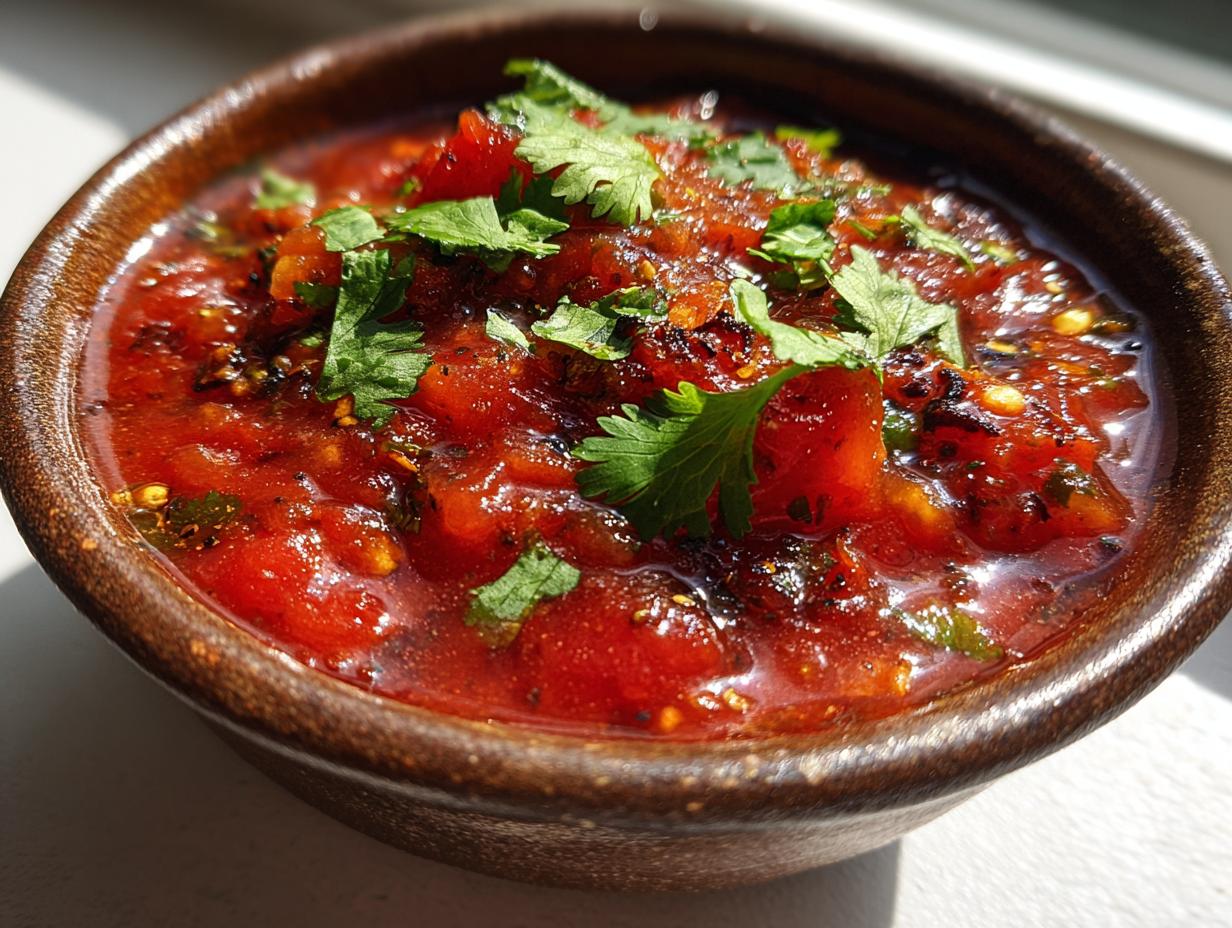
There’s something magical about a good Salsa Ranchera—it’s the kind of sauce that turns basic tacos into a fiesta and scrambled eggs into a breakfast worth waking up for. This smoky, spicy Mexican classic has been a staple in my kitchen for years, ever since my abuela taught me the secret to getting that perfect char on the tomatoes. Traditionally, it’s rustic and bold, with just enough heat to wake up your taste buds without overpowering them. I love how versatile it is—drizzle it over grilled carne asada, spoon it onto huevos rancheros, or just dip a warm tortilla chip straight into the bowl. Trust me, once you taste homemade salsa ranchera, the jarred stuff just won’t cut it anymore.
Ingredients for Salsa Ranchera
Gathering the right ingredients is the first step to making salsa ranchera that’ll have everyone asking for seconds. Don’t let the short list fool you—each element plays a crucial role in creating that perfect balance of smoky, spicy, and bright flavors. Here’s what you’ll need:
- 4 medium tomatoes – Look for ripe ones with firm flesh; they’ll char beautifully and give the salsa its rich base
- 1 white onion, quartered – White onions have just the right bite without being overpowering
- 2 garlic cloves, peeled – Fresh is best here; no powdered substitute will do
- 2-3 serrano peppers – Start with 2 if you’re heat-shy (you can always add more later!)
- 1/4 cup fresh cilantro, chopped – The stems have great flavor too, so don’t discard them
- 1 tsp salt – Or to taste—I usually end up adding a pinch more
- 1 tbsp vegetable oil – For that perfect sizzle when roasting
- 1/2 cup water – Helps achieve that ideal saucy consistency
Pro tip from my abuela: If you can find them, use tomatoes still on the vine—they seem to have that extra bit of sweetness that really makes the salsa sing.
How to Make Salsa Ranchera
Now comes the fun part—turning those simple ingredients into smoky, spicy magic! I’ve burned my fingers more times than I can count learning this process, but trust me, it’s worth every little blister. Follow these steps, and you’ll have salsa ranchera that’ll make your kitchen smell like a Mexican cantina.
Roast the Vegetables
Heat your oil in a heavy skillet (I swear by my cast iron for this) over medium heat. When it shimmers, carefully add your tomatoes, onion quarters, garlic cloves, and whole serrano peppers. Now here’s the key—don’t crowd them! Give each piece some breathing room so they char evenly instead of steaming.
Let them sizzle away for about 8 minutes, turning occasionally with tongs. You’re looking for gorgeous blackened spots—those little burnt bits are where the smoky flavor lives! My abuela used to say “if it’s not sticking a little, it’s not cooking right.” Just scrape up any tasty browned bits from the pan as you go.
Blend the Salsa Ranchera
Transfer your beautifully charred veggies to a blender (careful—they’re hot!). Toss in the fresh cilantro, salt, and about half the water. Now pulse a few times at first—you want to control the texture. I like mine with some body, so I stop when it’s just smooth enough to drizzle but still has tiny flecks of charred tomato skin.
Taste and adjust like a pro: need more heat? Add another pepper. Too thick? More water. Missing something? Probably another pinch of salt. This is where you make it yours! The salsa will thicken slightly as it cools, so err on the thinner side if you’re unsure.
Pro tip: Leave the blender lid’s center piece out and cover with a towel when blending hot ingredients—unless you want salsa ranchera decorating your ceiling!
Tips for the Best Salsa Ranchera
After making gallons of salsa ranchera (and eating most of it myself), I’ve picked up some tricks that’ll take your sauce from good to “oh my goodness, what’s in this?” Here’s what I’ve learned the hard way so you don’t have to:
Tomato wisdom: Those grocery store tomatoes that feel like baseballs? Skip ’em. Wait until you find tomatoes that give just slightly when pressed—they’ll have that deep, sweet flavor that makes salsa ranchera sing. If they’re not perfectly ripe, roast them a minute or two longer to coax out their sweetness.
Char like you mean it: Don’t be shy with the blackened spots! I used to pull my veggies off too early, afraid of burning them. But those dark, crispy edges? That’s where the magic happens. Just keep stirring so one side doesn’t get incinerated while the rest stays pale.
Glass is gold: Plastic containers might be convenient, but they’ll make your salsa taste like the fridge after a day. I save empty pasta sauce jars just for salsa storage—the glass keeps flavors fresh for a solid week. Bonus: the wide mouths make scooping easy when you’re in a hurry to top your morning eggs.
Heat control: Made it too spicy? A squeeze of lime and pinch of sugar can balance the heat without dulling the flavor. Not spicy enough? Blend in an extra raw serrano at the end for bright, fresh heat that’ll sneak up on you.
The resting secret: I know it’s hard, but try to let your salsa sit for at least 30 minutes before digging in. The flavors meld together beautifully as it cools to room temp. (Okay, fine—I won’t judge if you taste it straight from the blender. I do it too.)
Salsa Ranchera Variations
One of my favorite things about salsa ranchera is how easily you can play with the flavors to make it your own. My abuela would sometimes wink and say “recipes are just suggestions” before tossing in whatever looked good from her garden. Here are some of my go-to twists that keep things exciting while staying true to the spirit of this classic sauce:
Tangy tomatillo twist: Replace half the tomatoes with roasted tomatillos for a brighter, slightly tart version. The tomatillos add this wonderful acidity that pairs perfectly with rich carne asada. Just peel off the husks, give them a quick rinse to remove the sticky residue, and roast them alongside your other veggies.
Pepper power play: Not everyone loves the face-melting heat of serranos (though I certainly do!). For a milder salsa, swap in jalapeños, they’ve got flavor without the fire. Or if you’re feeling adventurous, toss in a chipotle pepper from the can for that deep, smoky complexity. Just remember, chipotles pack heat and smoke, so start with half a pepper and taste as you go.
Citrus spark: Sometimes I’ll squeeze in the juice of half a lime right at the blending stage. It wakes up all the other flavors and adds this fresh zing that’s especially good on fish tacos. My cousin swears by orange juice instead for a sweeter touch—though abuela would raise an eyebrow at that one!
Herb experiments: While cilantro is classic, I’ve had great success with other herbs too. A handful of fresh epazote (if you can find it) gives an earthy, almost minty note that’s traditional in some regions. Or try replacing some cilantro with flat-leaf parsley for a different green flavor that still keeps things fresh.
The beauty of these variations? They all start with that same wonderful charred base, so even when you mix things up, it still tastes unmistakably like salsa ranchera at heart. Just don’t tell my abuela I sometimes add a splash of tequila to the blender—that’s our little secret!
Serving Suggestions for Salsa Ranchera
Oh, the places your salsa ranchera can go! This smoky, spicy wonder isn’t just a condiment—it’s the life of the party on any plate. I’ve lost count of how many meals I’ve rescued from blandness with a generous spoonful of this magic sauce. Here are my absolute favorite ways to serve it (though honestly, I’ve been known to eat it straight from the jar with a tortilla chip when no one’s looking).
Breakfast champion: Drizzle it over huevos rancheros for the ultimate morning wake-up call. The combination of runny eggs, crispy tortillas, and that smoky salsa? Pure breakfast perfection. I also love stirring a spoonful into scrambled eggs—it turns ordinary eggs into something special with zero extra effort.
Taco’s best friend: Whether you’re doing carne asada, carnitas, or even just simple bean tacos, salsa ranchera takes them to the next level. My trick? Warm your tortillas, then smear a thin layer of refried beans before adding the meat and toppings. The salsa clings to the beans beautifully instead of making your tortilla soggy.
Grill master’s secret weapon: Brush it on chicken thighs during the last few minutes of grilling for incredible caramelization. Or serve it alongside grilled skirt steak—the char from the meat and the char from the salsa were made for each other. Pro tip: Thin it with a little extra water or lime juice to make a killer marinade.
Chip dip extraordinaire: Warm tortilla chips and salsa ranchera might be the simplest—and most addictive—combination known to humankind. For parties, I’ll sometimes mix in some crumbled queso fresco or diced avocado right before serving for extra richness.
Unexpected superstar: Don’t limit yourself to Mexican food! I’ve used it as a burger topping (especially good with pepper jack cheese), stirred it into rice for instant flavor, and even dolloped it on baked potatoes instead of sour cream. Last week I mixed some into my tuna salad sandwich—don’t knock it till you try it!
The beauty of salsa ranchera is how it makes everything taste like you spent hours cooking, even when you’re just throwing together leftovers. Keep a jar in your fridge (if it lasts that long), and suddenly every meal feels a little more special.
Storing and Reheating Salsa Ranchera
Here’s the good news—your salsa ranchera will stay fresh and flavorful for days, meaning you can enjoy that smoky goodness all week long! But there are a few storage tricks I’ve learned over the years that’ll keep it tasting just-made.
Glass is your best friend: Always store your salsa in glass jars or containers. Plastic absorbs odors and flavors, and after a day or two, you’ll notice your salsa starts tasting… off. I save empty pickle or pasta sauce jars just for this purpose—they’re the perfect size and the lids seal tight. Just make sure they’re completely clean and dry before filling.
The fridge sweet spot: Your salsa will keep beautifully in the refrigerator for up to a week. The flavors actually deepen and meld together after a day or two—some might argue it tastes even better! Just press a piece of plastic wrap directly onto the surface before sealing with the lid to prevent oxidation (that’s chef talk for “keeps it from turning weird colors”).
No reheating needed: Unlike some sauces, salsa ranchera tastes best at room temperature or slightly cool. If you’ve stored it in the fridge, just take it out about 15 minutes before serving to take the chill off. The flavors really wake up when they’re not ice-cold. Trust me—I’ve tried microwaving it once in desperation, and it just wasn’t the same!
Freezer? Maybe not: While you can freeze salsa ranchera, the texture changes when thawed—the tomatoes get a bit watery and the fresh cilantro flavor fades. If you must freeze it, leave out the cilantro and add it fresh when you thaw and serve. But honestly? It’s so quick to make fresh, I’d rather whip up a new batch when the craving hits.
Pro tip: If you notice your salsa separating in the fridge (totally normal!), just give it a good stir before serving. And if you’re like me and go through it too fast to worry about storage… well, more power to you!
Salsa Ranchera Nutritional Information
Let’s be real—you’re not eating salsa ranchera because it’s a “health food.” But here’s the happy surprise: this flavor-packed sauce is actually pretty light! Since we’re using fresh vegetables and just a touch of oil, you can enjoy it without guilt. Here’s the breakdown per 2-tablespoon serving (though let’s be honest—who stops at just one spoonful?):
- Calories: 25
- Total Fat: 1g (mostly from that little bit of vegetable oil)
- Sodium: 150mg (add less salt if you’re watching this)
- Carbs: 3g (with 1g fiber from all those veggies!)
- Sugar: 2g (all natural from the tomatoes and onions)
- Protein: 0g (but pair it with beans or meat for a complete meal)
Now for the fine print: These numbers are estimates based on standard ingredients. Your actual nutrition will vary depending on your tomato’s sweetness, how much oil you use, and whether you go wild with extra peppers (I won’t tell!). The good news? Unlike those jarred salsas packed with preservatives, you know exactly what’s going into your homemade version—just fresh, real food.
Pro tip: If you’re really watching calories, you can reduce the oil to just a teaspoon (just be extra careful not to burn the veggies). But honestly, that little bit of fat helps your body absorb all the good stuff from the tomatoes and peppers, so I say it’s worth it!
Frequently Asked Questions About Salsa Ranchera
How long does salsa ranchera last?
Your homemade salsa ranchera will stay fresh in the fridge for about 5-7 days if stored properly in an airtight glass container. I always give mine a sniff test after day 5—if it still smells bright and tomato-y, it’s good to go! The acidity from the tomatoes and the charring process help preserve it naturally, but unlike store-bought versions with preservatives, fresh salsa doesn’t last forever. Pro tip: Write the date on the jar lid with a marker so you don’t have to play the guessing game!
Can I make salsa ranchera less spicy?
Absolutely! The heat level is totally in your control. For milder salsa ranchera, start with just 1 serrano pepper (remove the seeds and membranes for even less heat). You can also swap in jalapeños, which are naturally milder. My sneaky trick? Add a teaspoon of honey or sugar when blending—it balances the heat without dulling the other flavors. And remember—you can always add more heat later, but you can’t take it out once it’s in there!
Is salsa ranchera gluten-free?
Yes! Traditional salsa ranchera is naturally gluten-free since it’s made from just fresh vegetables, herbs, and spices. Even better news for gluten-sensitive folks—it’s usually dairy-free too. Just be cautious if serving with chips—some store-bought tortilla chips contain wheat flour, so check labels if that’s a concern. I stick with 100% corn tortilla chips to keep everything celiac-friendly and delicious.
Tell Me About Your Salsa Ranchera Adventure!
Nothing makes me happier than hearing how this recipe turns out in your kitchen! Did you stick with the classic version or try one of the fun variations? Maybe you discovered a brilliant new way to serve it that I haven’t thought of yet (if so, I need details!). Drop a note in the comments below—I read every single one and always respond. Your feedback helps me make these recipes even better!
And hey, if you snapped a photo of your smoky, charred-perfect salsa ranchera (or the carnitas tacos you drowned in it), tag me on Instagram @[yourhandle]. There’s something magical about seeing how the same recipe comes to life in different kitchens. Five-star ratings are always appreciated too—they help other salsa lovers find this recipe. Now go forth and sauce everything in sight!
PrintFiery 4-Ingredient Salsa Ranchera That Wows Every Time
A traditional Mexican salsa with a smoky, spicy flavor. Perfect for tacos, eggs, or grilled meats.
- Prep Time: 10 mins
- Cook Time: 10 mins
- Total Time: 20 mins
- Yield: 2 cups 1x
- Category: Sauce
- Method: Stovetop
- Cuisine: Mexican
- Diet: Vegetarian
Ingredients
- 4 medium tomatoes
- 1 white onion, quartered
- 2 garlic cloves
- 2–3 serrano peppers
- 1/4 cup fresh cilantro, chopped
- 1 tsp salt
- 1 tbsp vegetable oil
- 1/2 cup water
Instructions
- Heat oil in a skillet over medium heat.
- Add tomatoes, onion, garlic, and peppers. Roast until charred, about 8 minutes.
- Transfer to a blender. Add cilantro, salt, and water.
- Blend until smooth. Adjust seasoning if needed.
- Serve warm or at room temperature.
Notes
- Adjust pepper quantity for desired heat.
- Store in an airtight container for up to a week.
Nutrition
- Serving Size: 2 tbsp
- Calories: 25
- Sugar: 2g
- Sodium: 150mg
- Fat: 1g
- Saturated Fat: 0g
- Unsaturated Fat: 1g
- Trans Fat: 0g
- Carbohydrates: 3g
- Fiber: 1g
- Protein: 0g
- Cholesterol: 0mg